The Story
Thankfully, they've been supported for far longer than we ever imagined as it was actually the very 2nd item TCB's ever made.
That's precisely why we deliberately refrained from producing an item that had always been in the back of our minds.
We worried that the product range might overlap. By increasing the number of products from the same era and with the similar fabric, the sewing specifications, etc,
we worried that the individual presence of each item might become diluted.
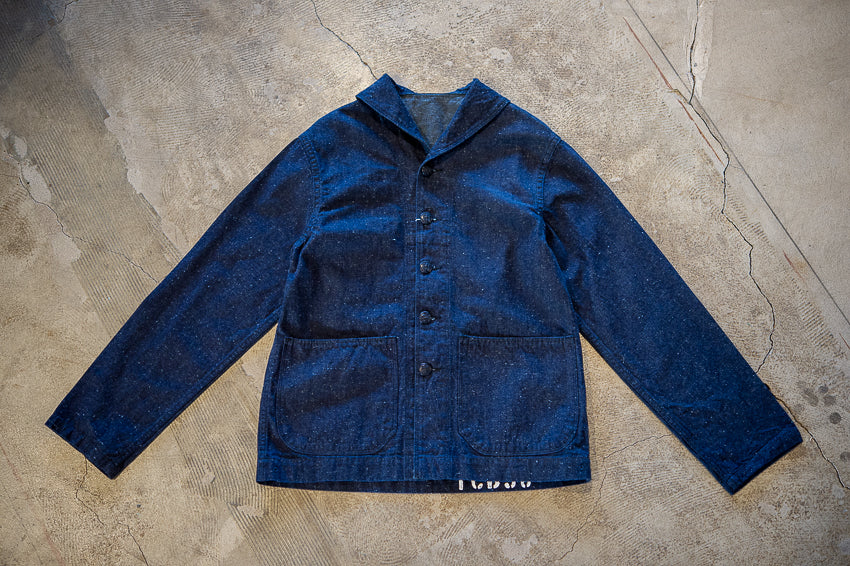
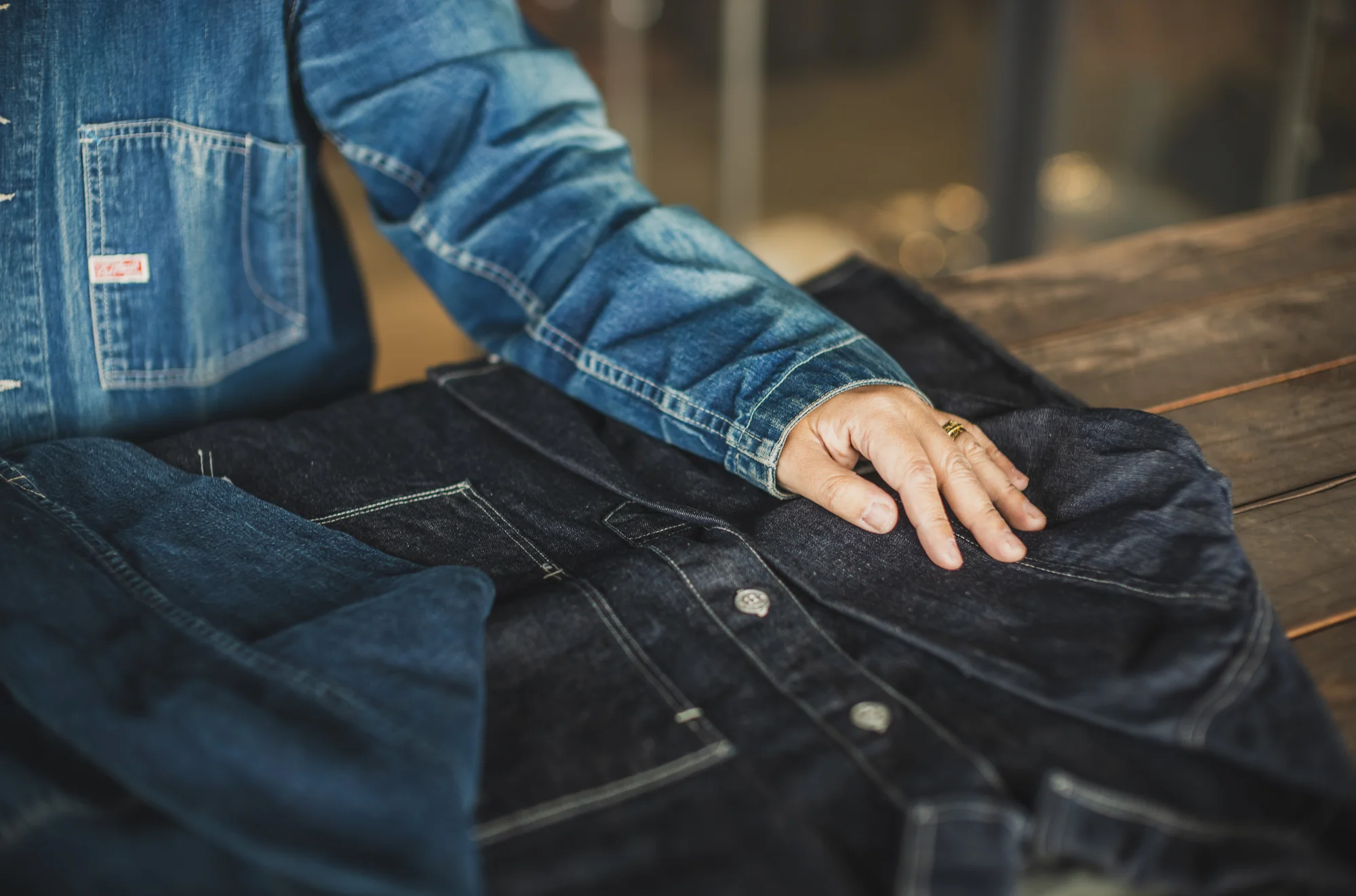
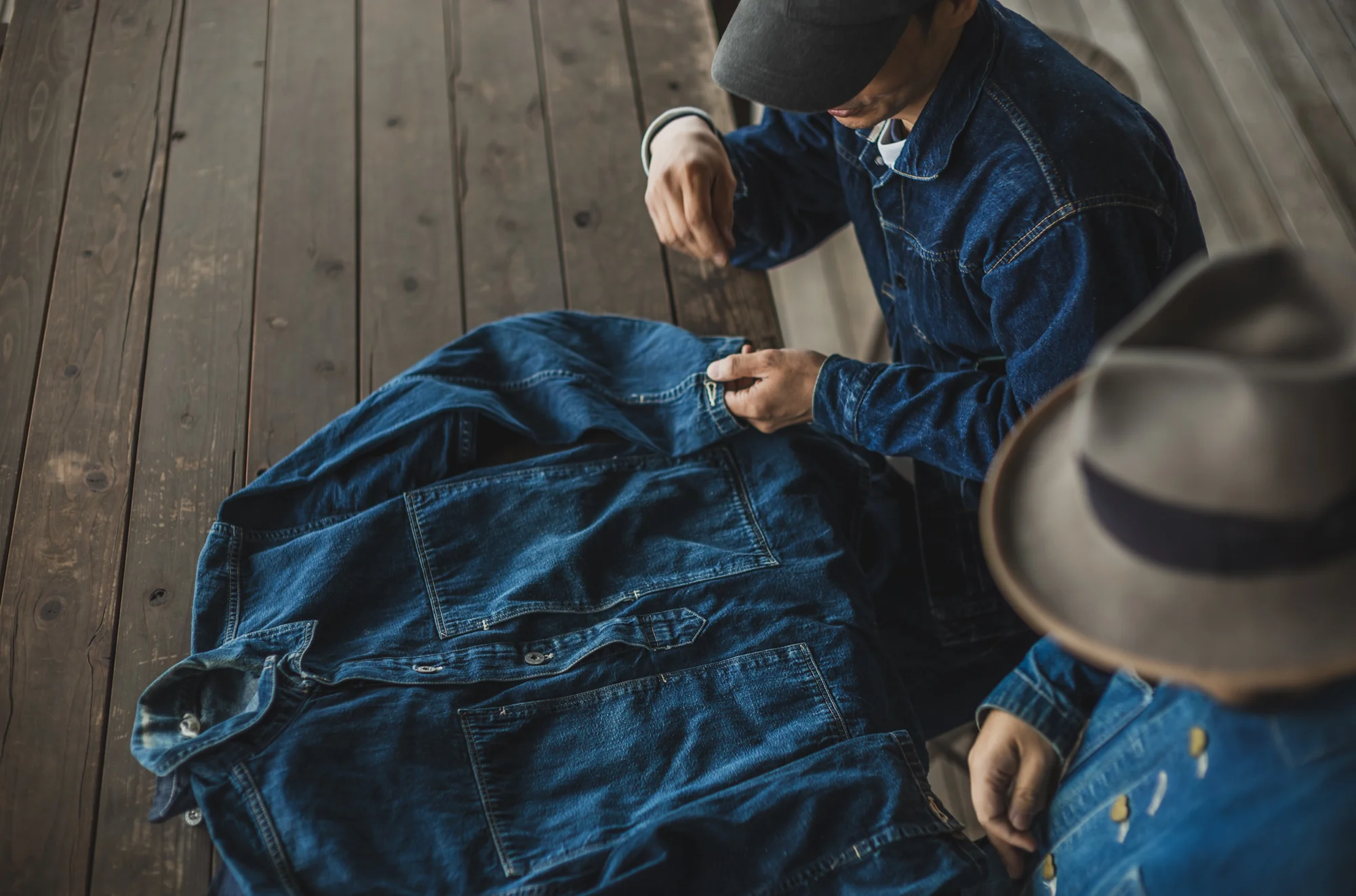
There was an item that we had been holding back on for that reason. We've owned the vintage one for a long time, and in fact, we even made a sample about 7 years ago. But for the reasons mentioned above, we shelved the project, thinking, "We already have the Seamen series..." That item was the US ARMY M-35 Pull Over Shirt. One day, when I picked up that sample again after a long time, for reasons I can't explain, I felt an overwhelming urge to make it now.It was like flipping through an old photo album. The atmosphere from that time still lingers, and conversely, I felt that this is the right timing to release these shirts. When that happens, TCB moves quickly.
We thought a lot about the name of this new product until the very end.
A-Men?
None of them felt quite right. That's when I came across the word "Dogface."
It's slang for an infantryman in the US Army.
But instead of using it as is, how should we translate it for TCB?
It was not long before we reached the word, Catface, haha.
A garment that had been dormant for a long time has finally taken shape.
Thankfully, they've been supported for far longer than we ever imagined as it was actually the very 2nd item TCB's ever made.
That's precisely why we deliberately refrained from producing an item that had always been in the back of our minds.
We worried that the product range might overlap. By increasing the number of products from the same era and with the similar fabric, the sewing specifications, etc,
we worried that the individual presence of each item might become diluted.
There was an item that we had been holding back on for that reason. We've owned the vintage one for a long time, and in fact, we even made a sample about 7 years ago. But for the reasons mentioned above, we shelved the project, thinking, "We already have the Seamen series..." That item was the US ARMY M-35 Pull Over Shirt. One day, when I picked up that sample again after a long time, for reasons I can't explain, I felt an overwhelming urge to make it now.It was like flipping through an old photo album. The atmosphere from that time still lingers, and conversely, I felt that this is the right timing to release these shirts. When that happens, TCB moves quickly.
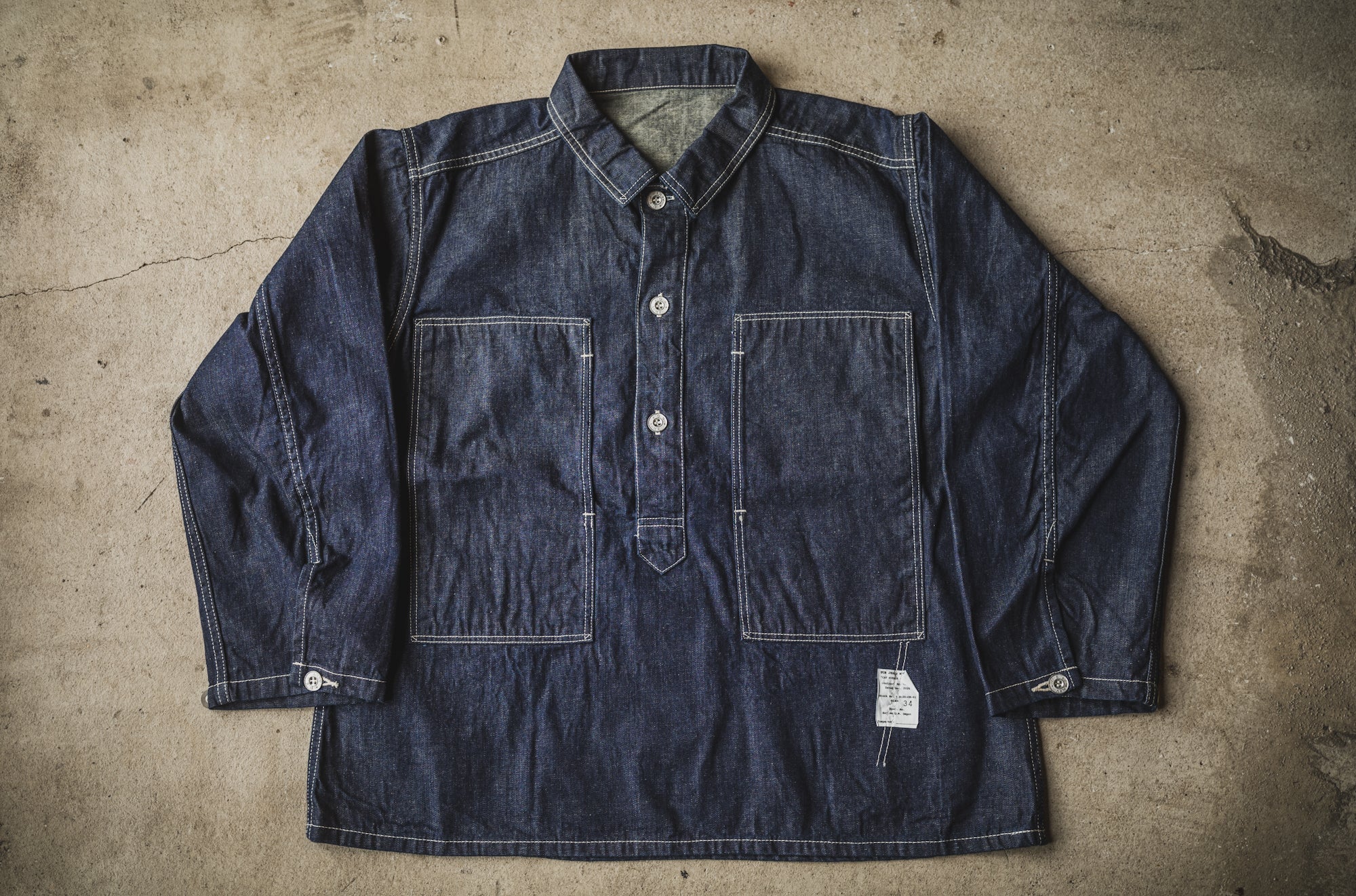
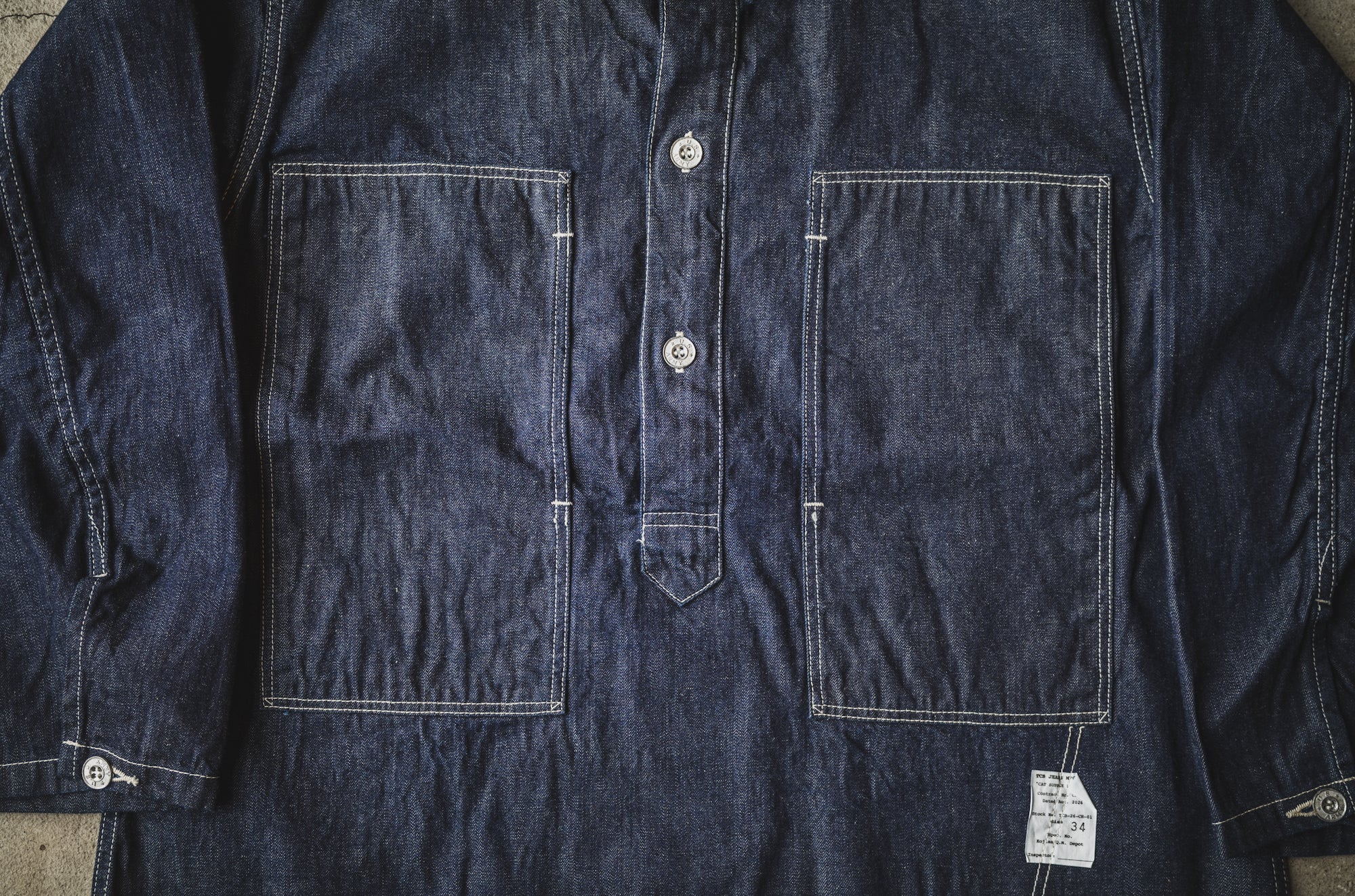
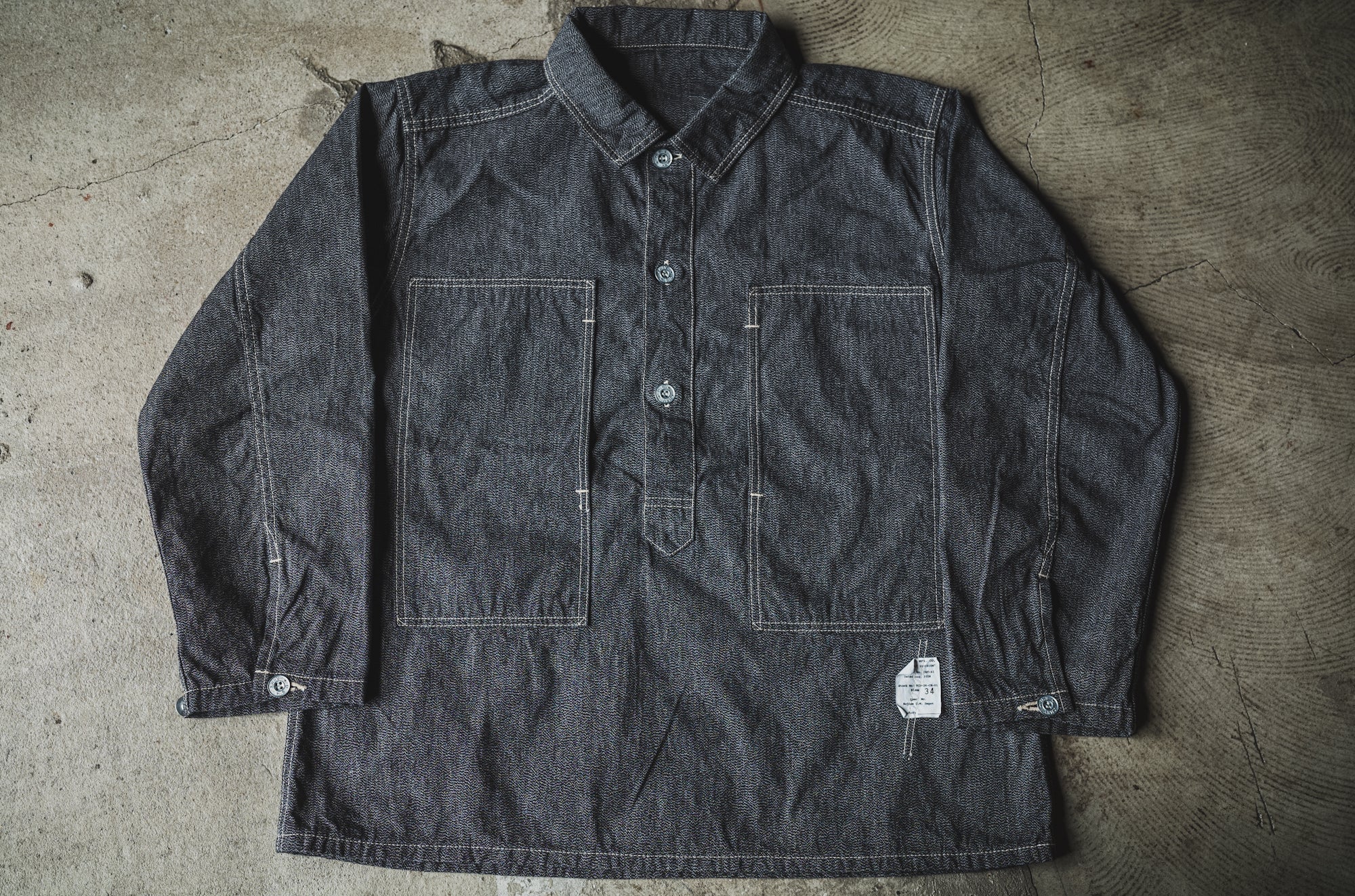
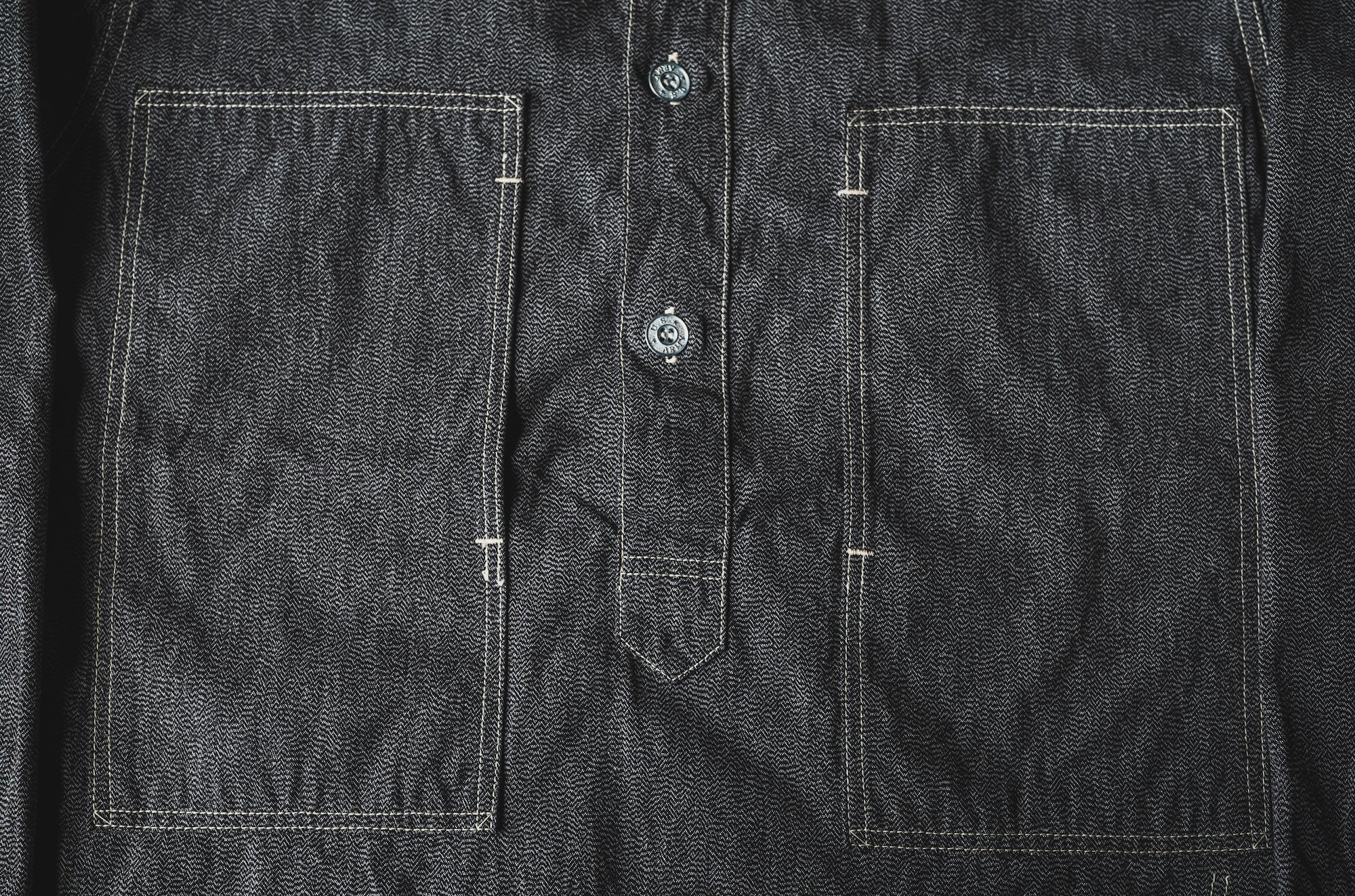
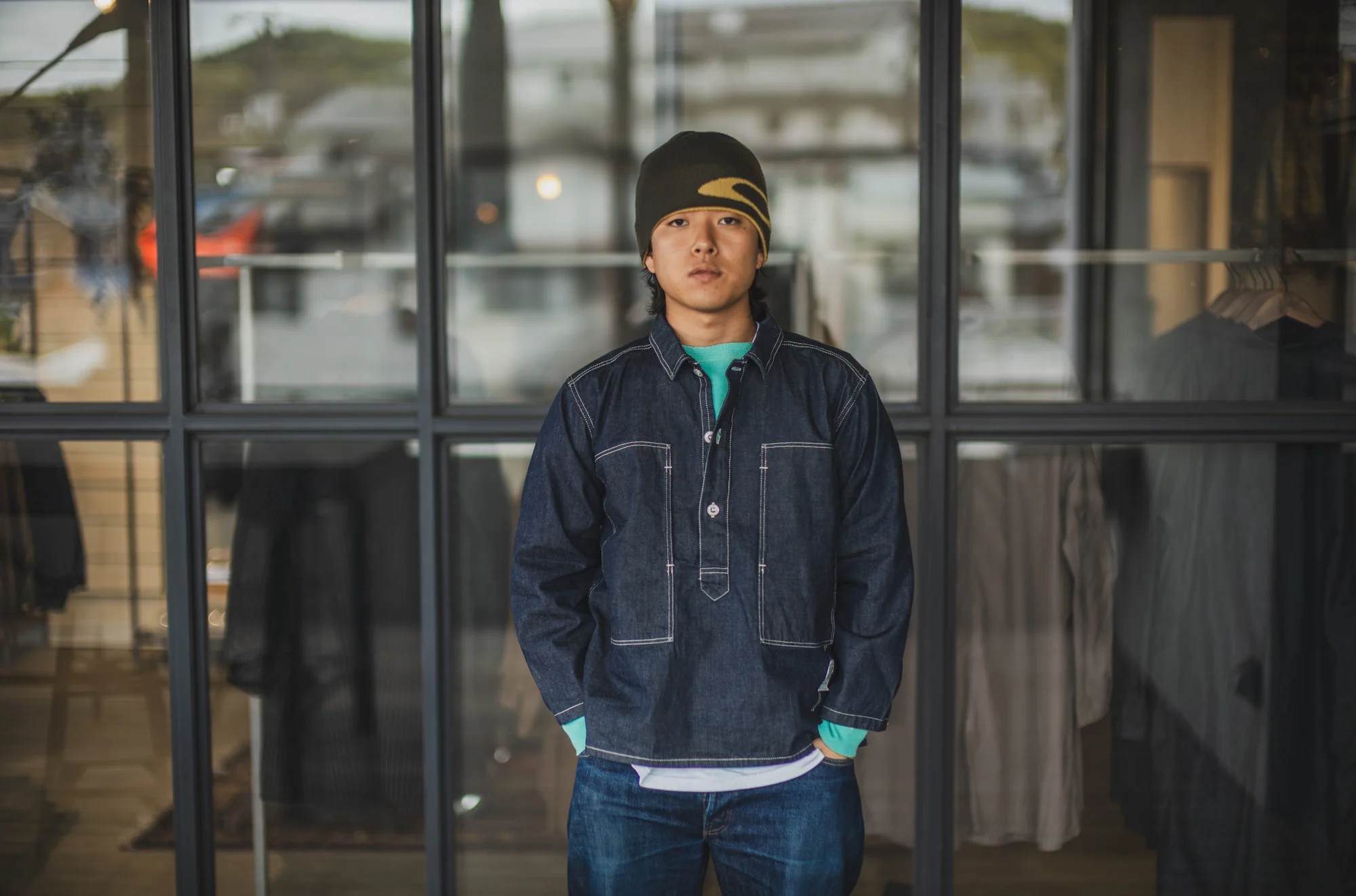
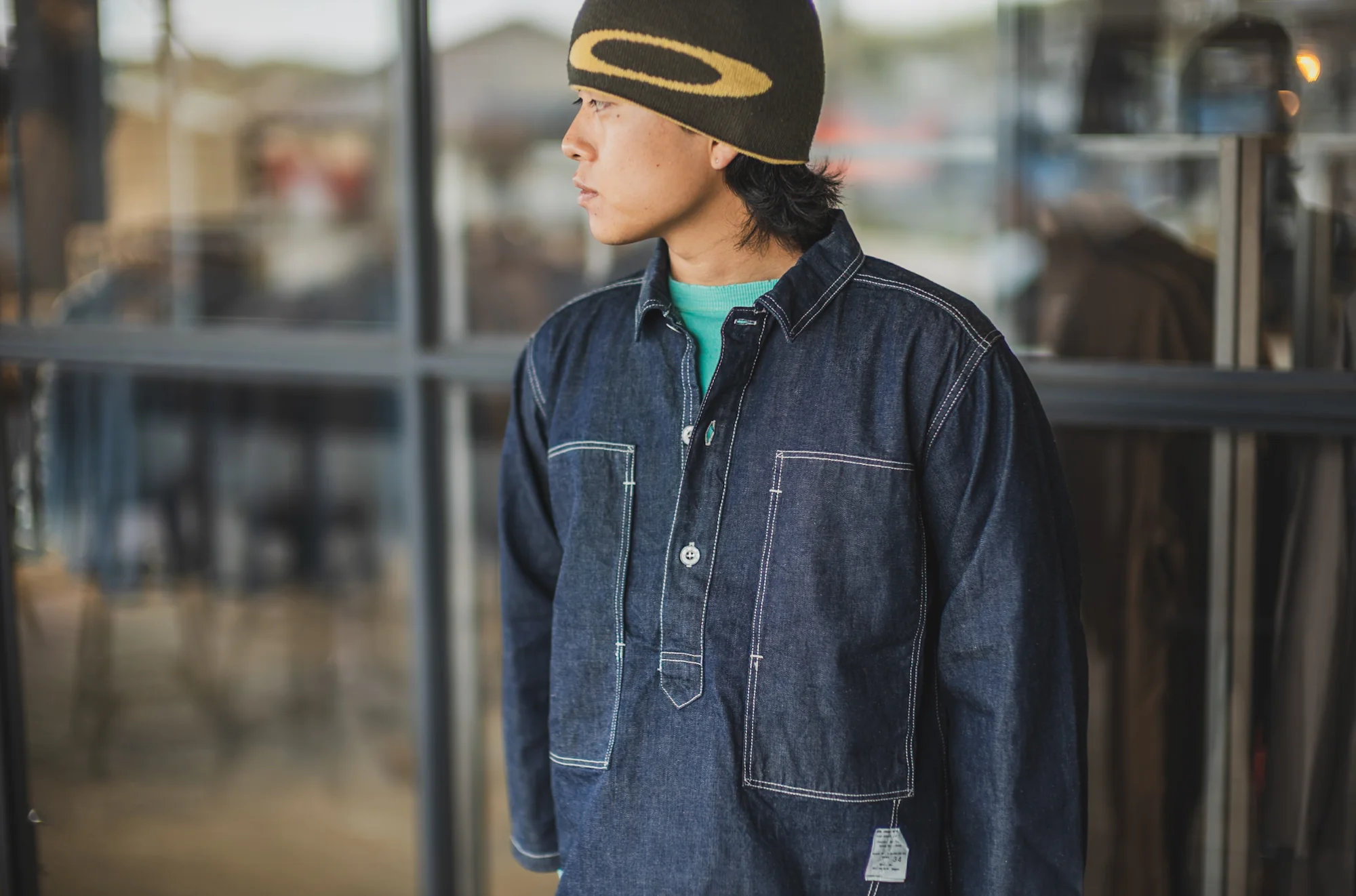
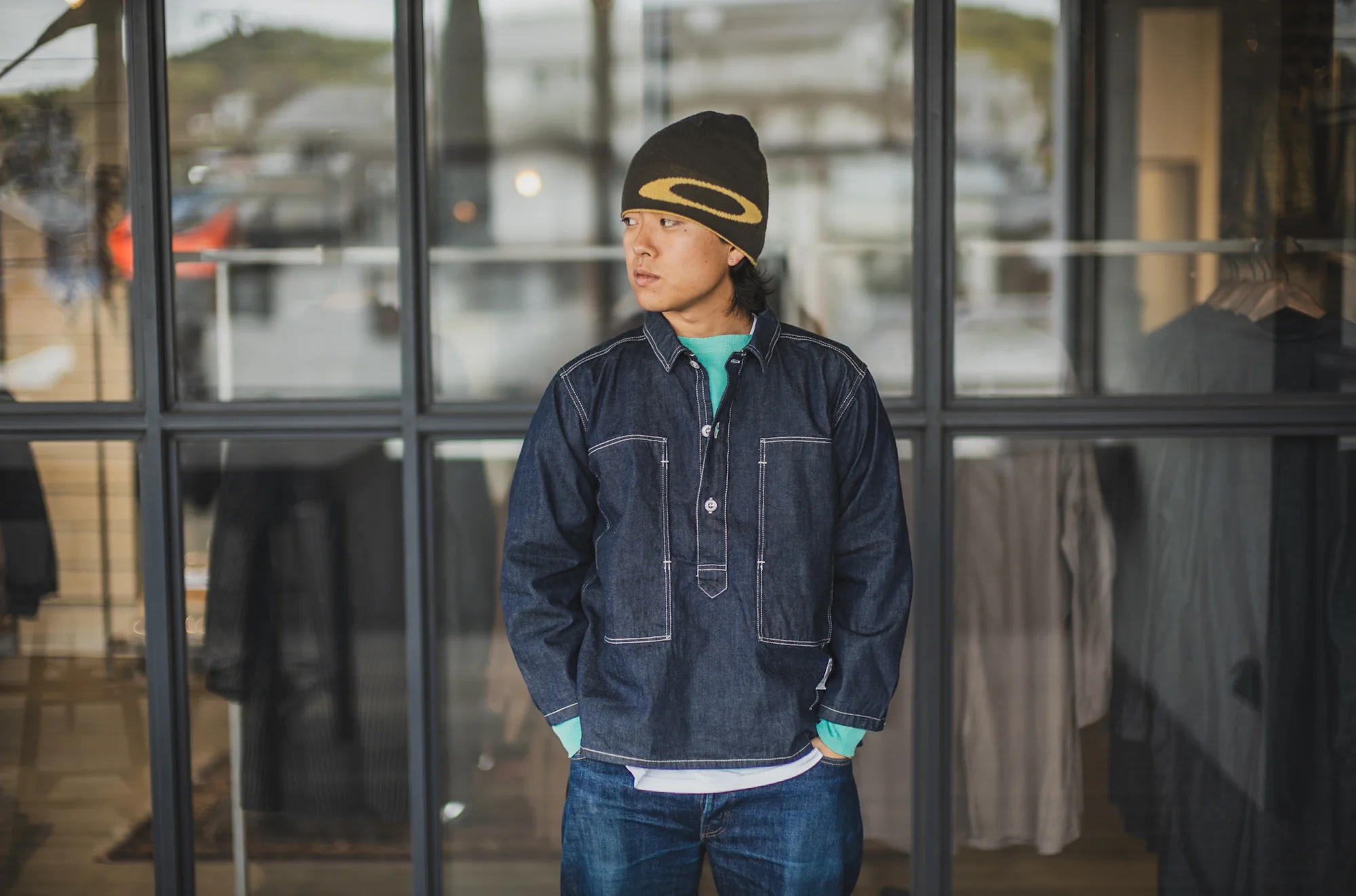
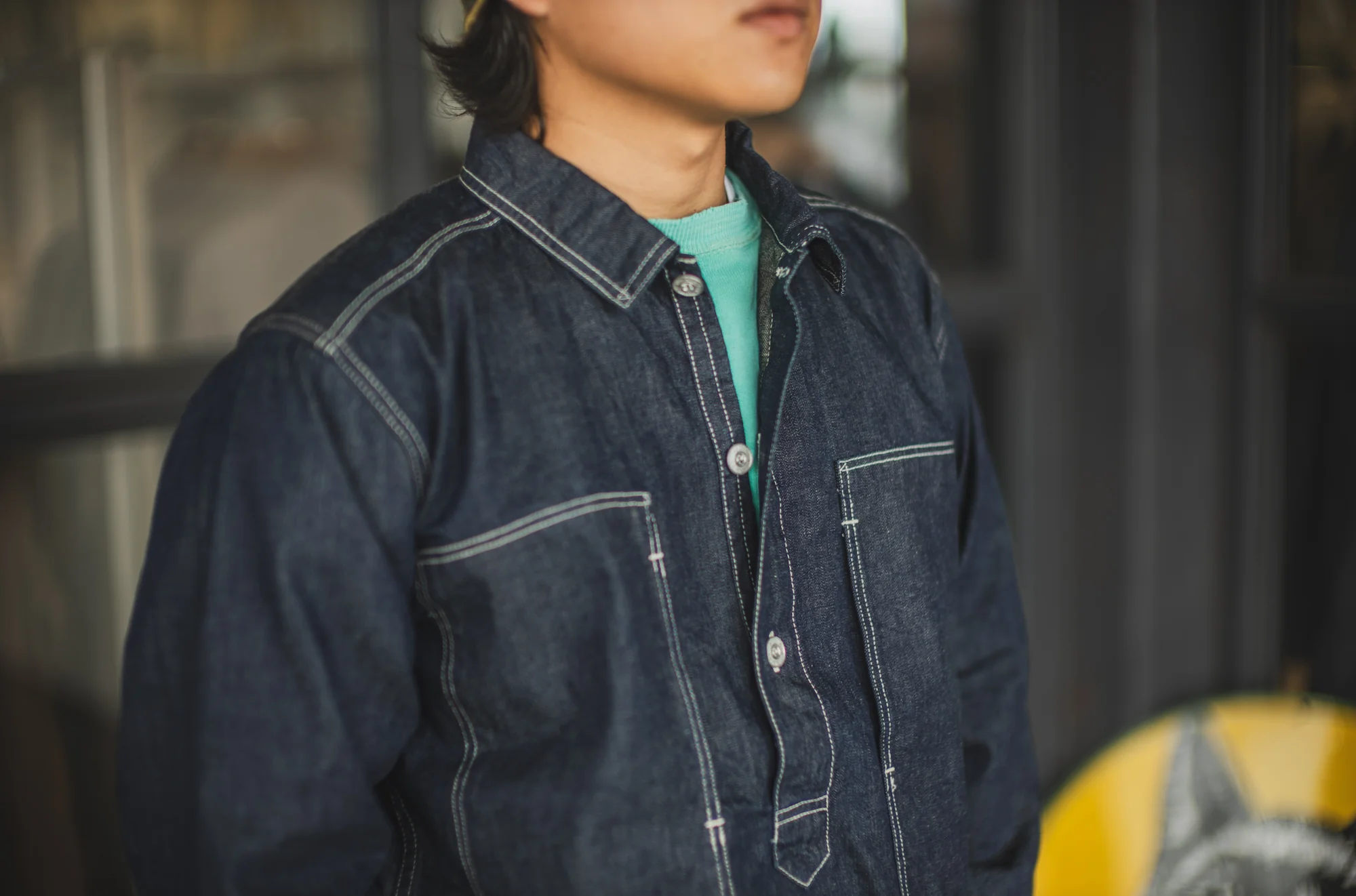
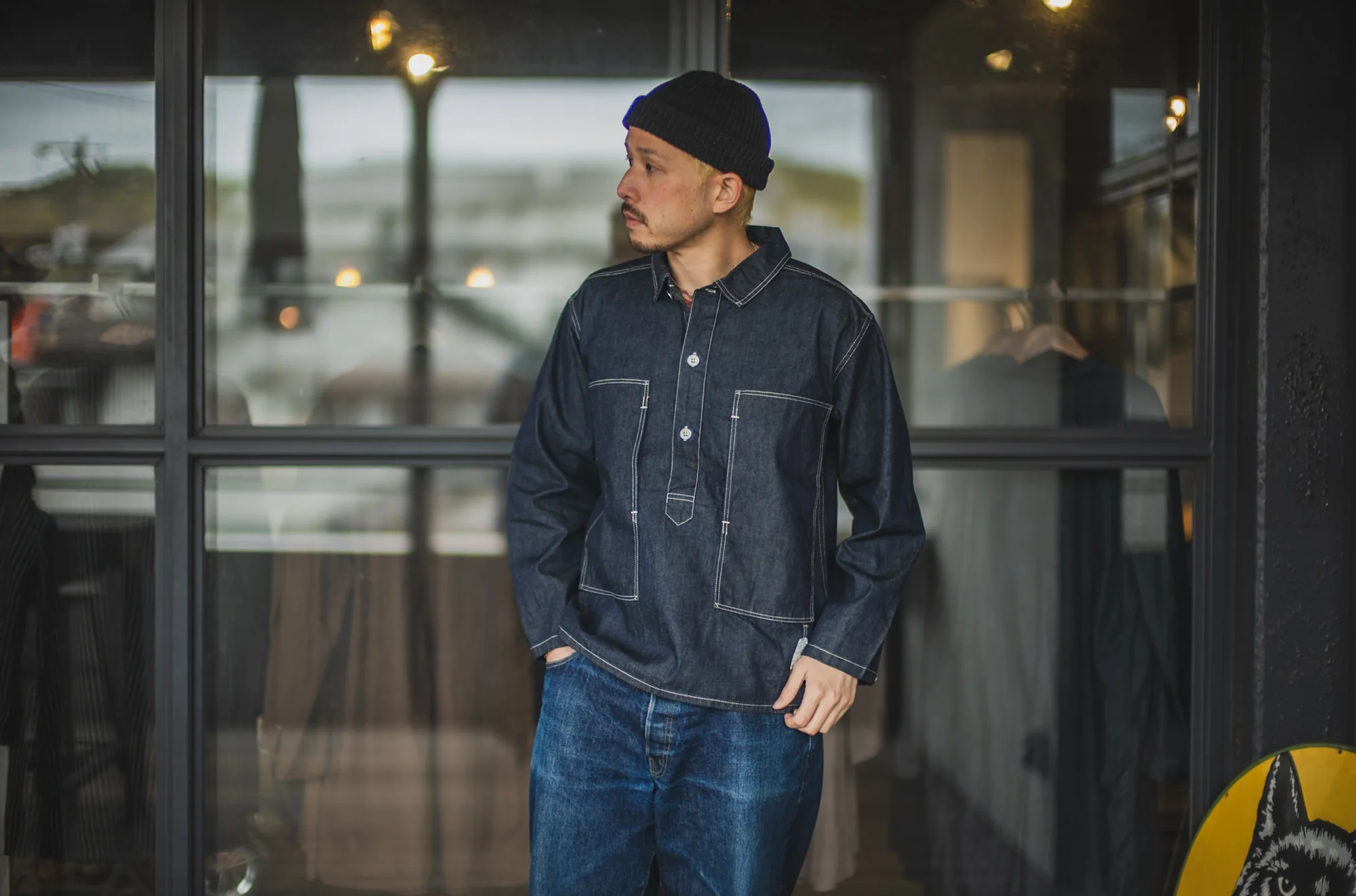
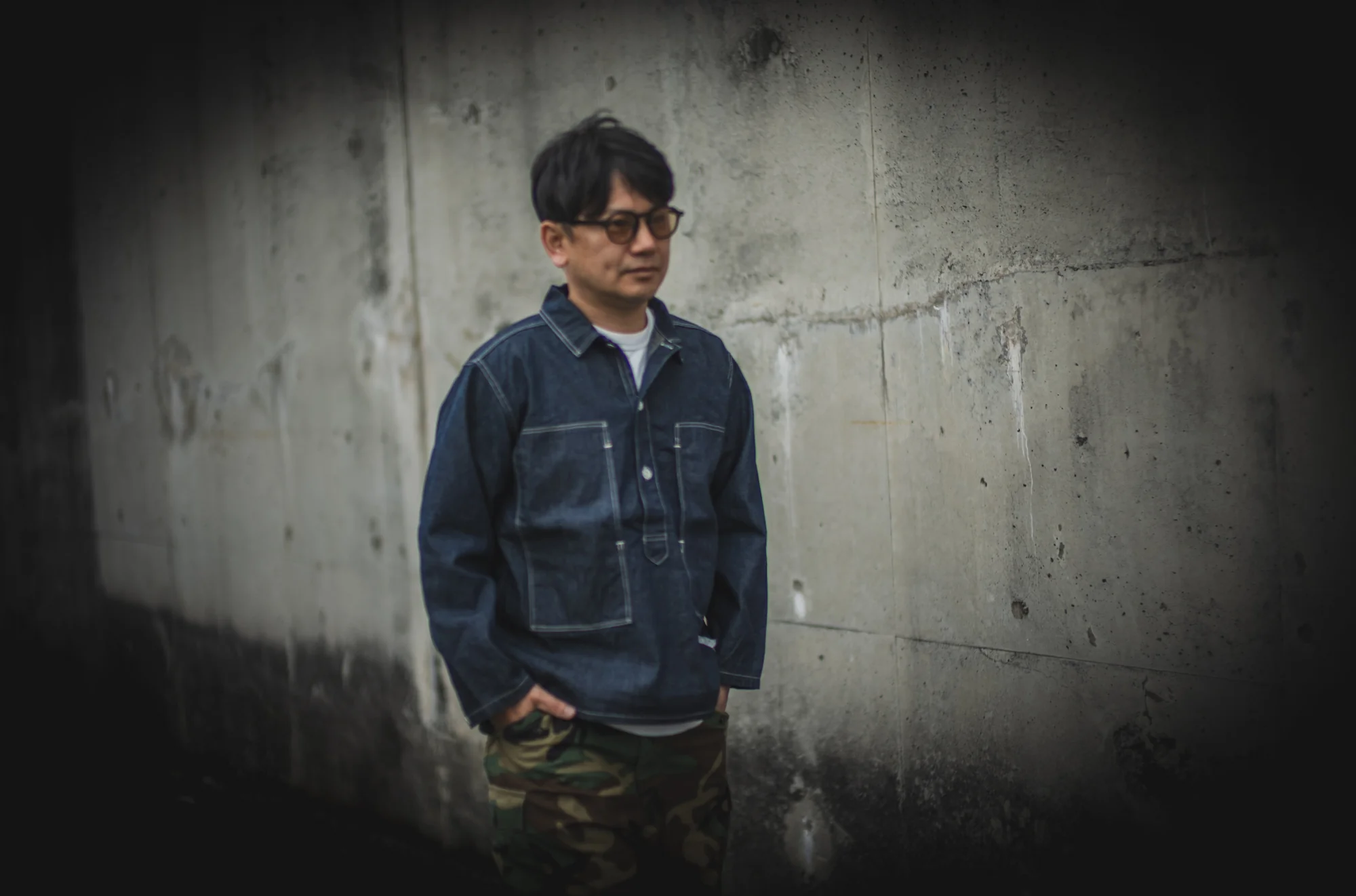
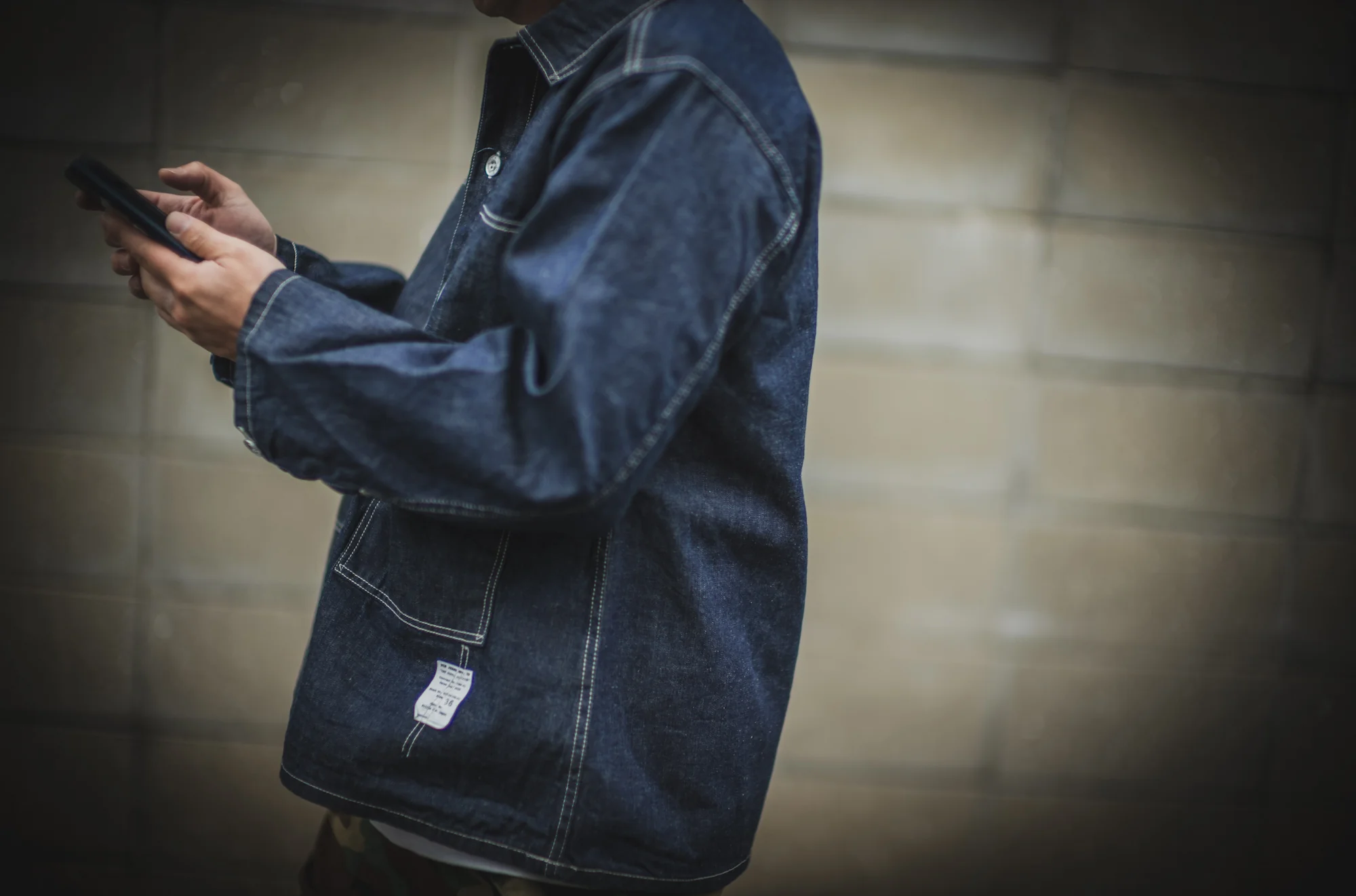
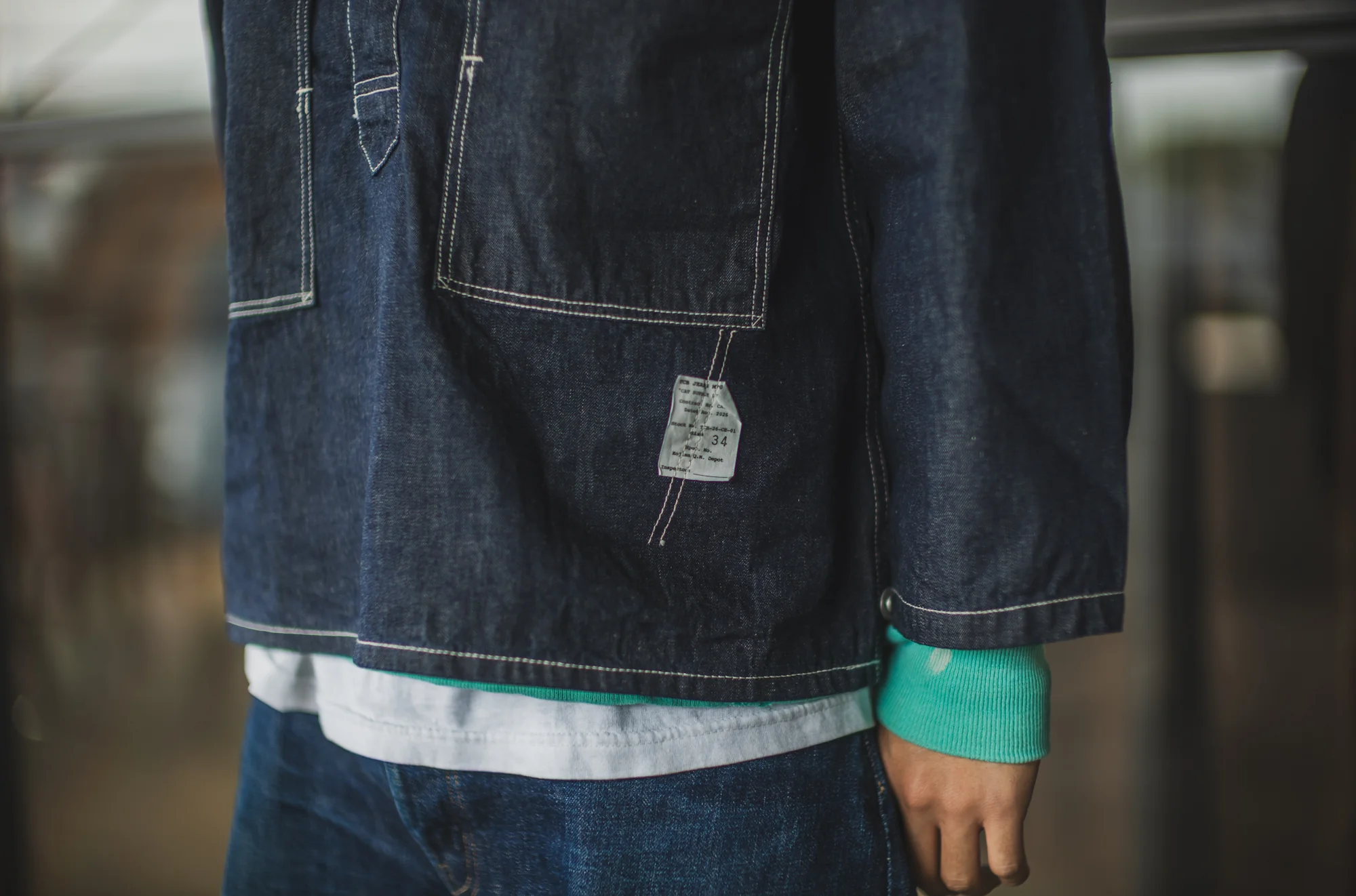
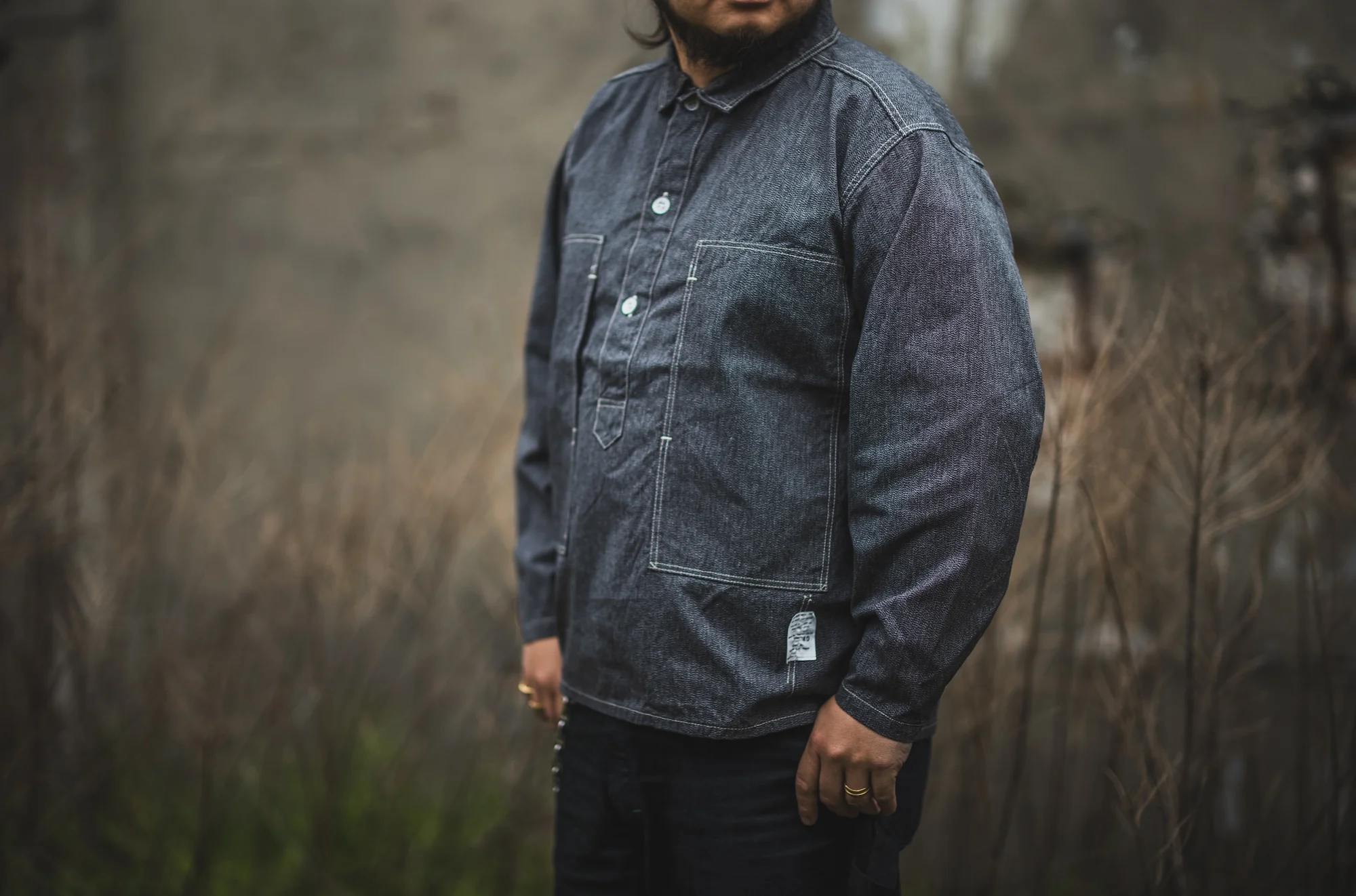
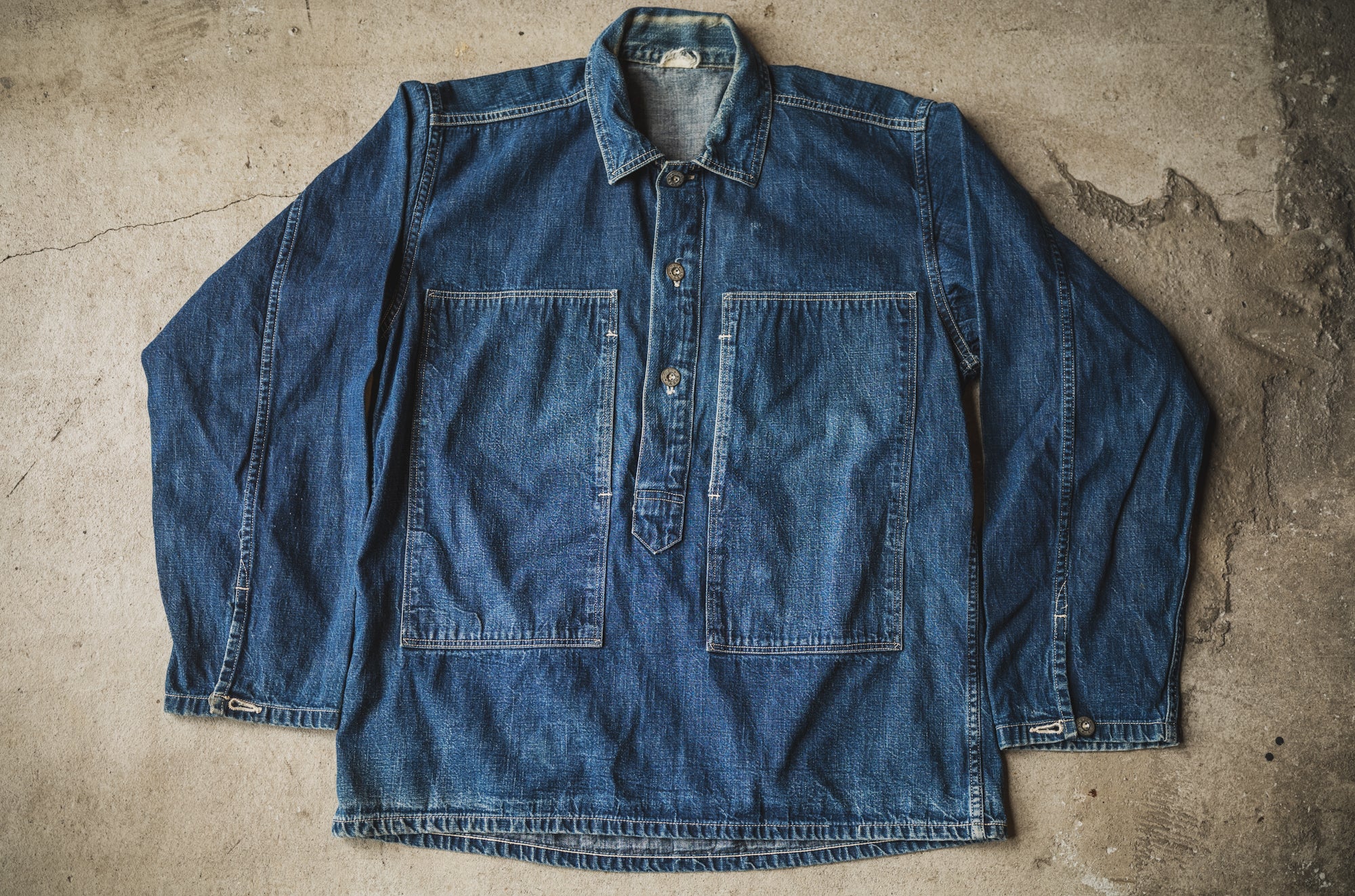
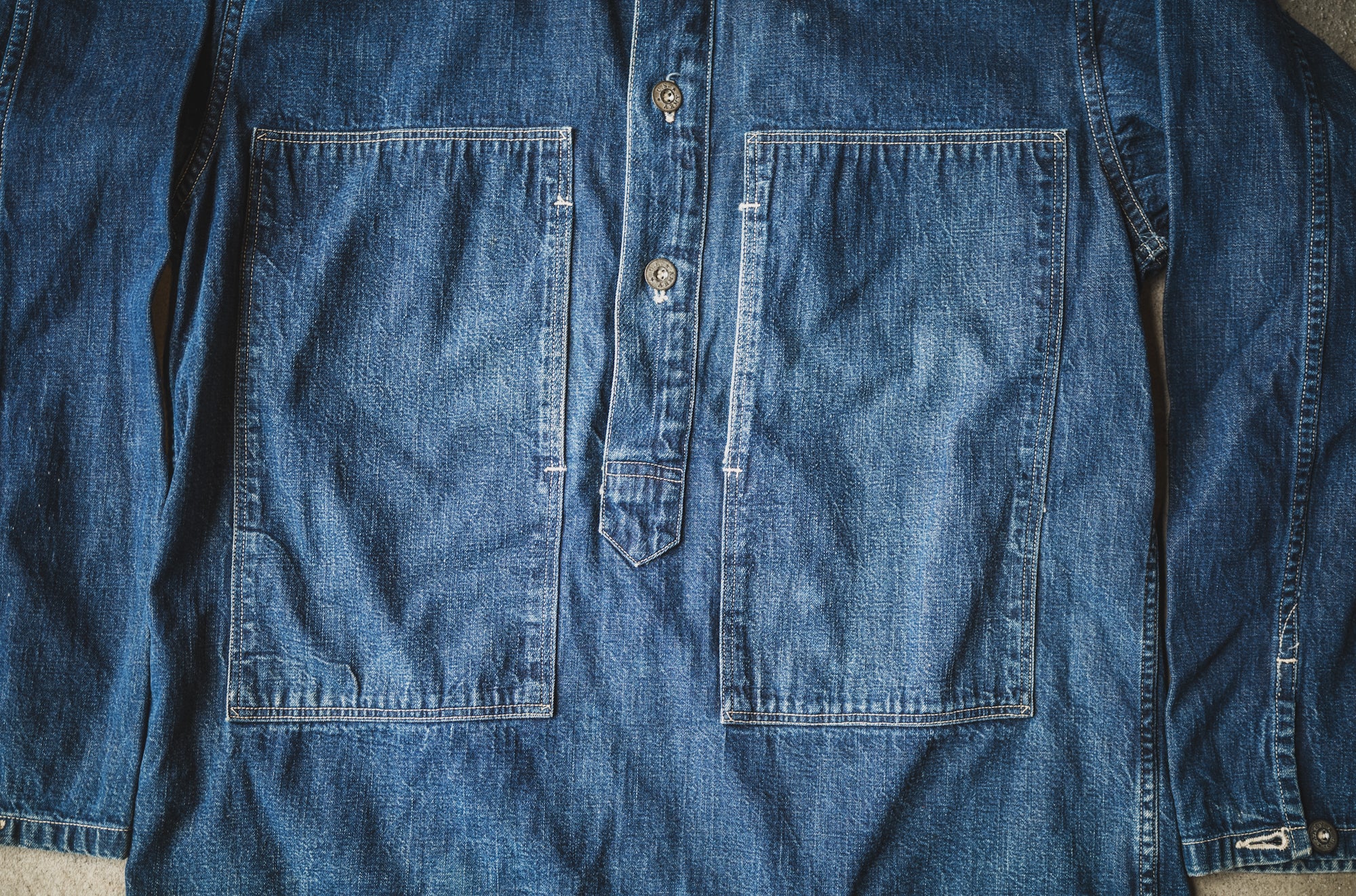
For the double stitching on the collar, it was a 1/4-inch (approximately 6mm wide) sewing machine used.
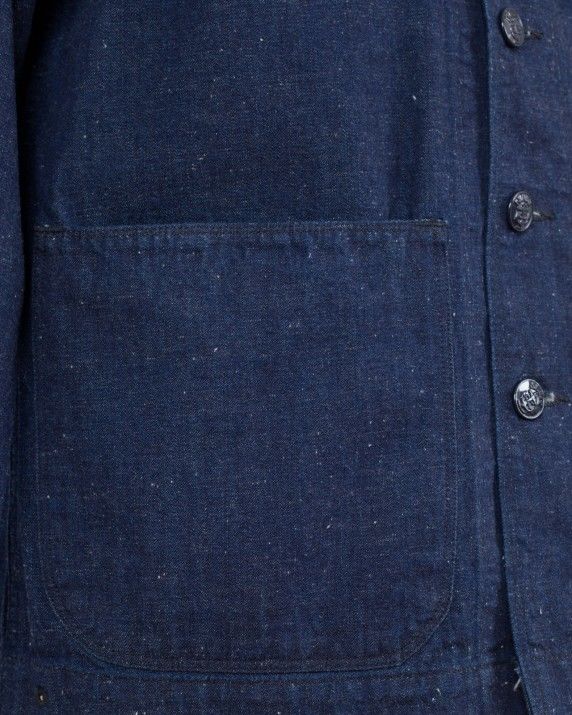
On the other hand, for the rectangular chest pockets, also double-stitched, it was a 3/16-inch (approximately 5mm wide) sewing machine used.
This difference in seam width is something that sewing factories definitely want to avoid. Why? Because the production is all about efficiency. If you need more machines with a different machine setting, it'll slow down the production.
However, the vintage models we referenced this time were different.
This is purely my speculation, but...let's say once the order from the military was placed and the sewing specifications were set, there were two processes involving two-needle stitching and the factory had two double-needle sewing machines. One was set with 1/4inch and the other one was 3/16 inch. Even though the widths were different, they decided to use those two machines without changing the machine setting. I think it was just a practical, on-the-ground decision made by the sewing factory. Of course, "2 sewing machines" is just a hypothetical example; in reality, the decision was made on a much larger scale .
I think the interesting thing about military gear is the interpretation of the civilian factories towards the military specifications.
Back then, factories had to come up with many ideas as to how to meet the strict specifications with the equipment that the manufacturer had, sometimes they had to get through difficult specs by doing an almost foul play. I mean that it looks okay on the first look but if you look closely at how they are really sewn, it doesn't really meet requirements. That ingenuity and compromise ultimately manifest the product's uniqueness.
Originally, this wasn't clothing for sale but clothing to be supplied.
That rationality and the accumulation of on-the-ground decisions might be what makes the details most interesting when you look at them now.
We thought a lot about the name of this new product until the very end.
A-Men?
None of them felt quite right. That's when I came across the word "Dogface."
It's slang for an infantryman in the US Army.
But instead of using it as is, how should we translate it for TCB?
It was not long before we reached the word, Catface, haha.
A garment that had been dormant for a long time has finally taken shape.
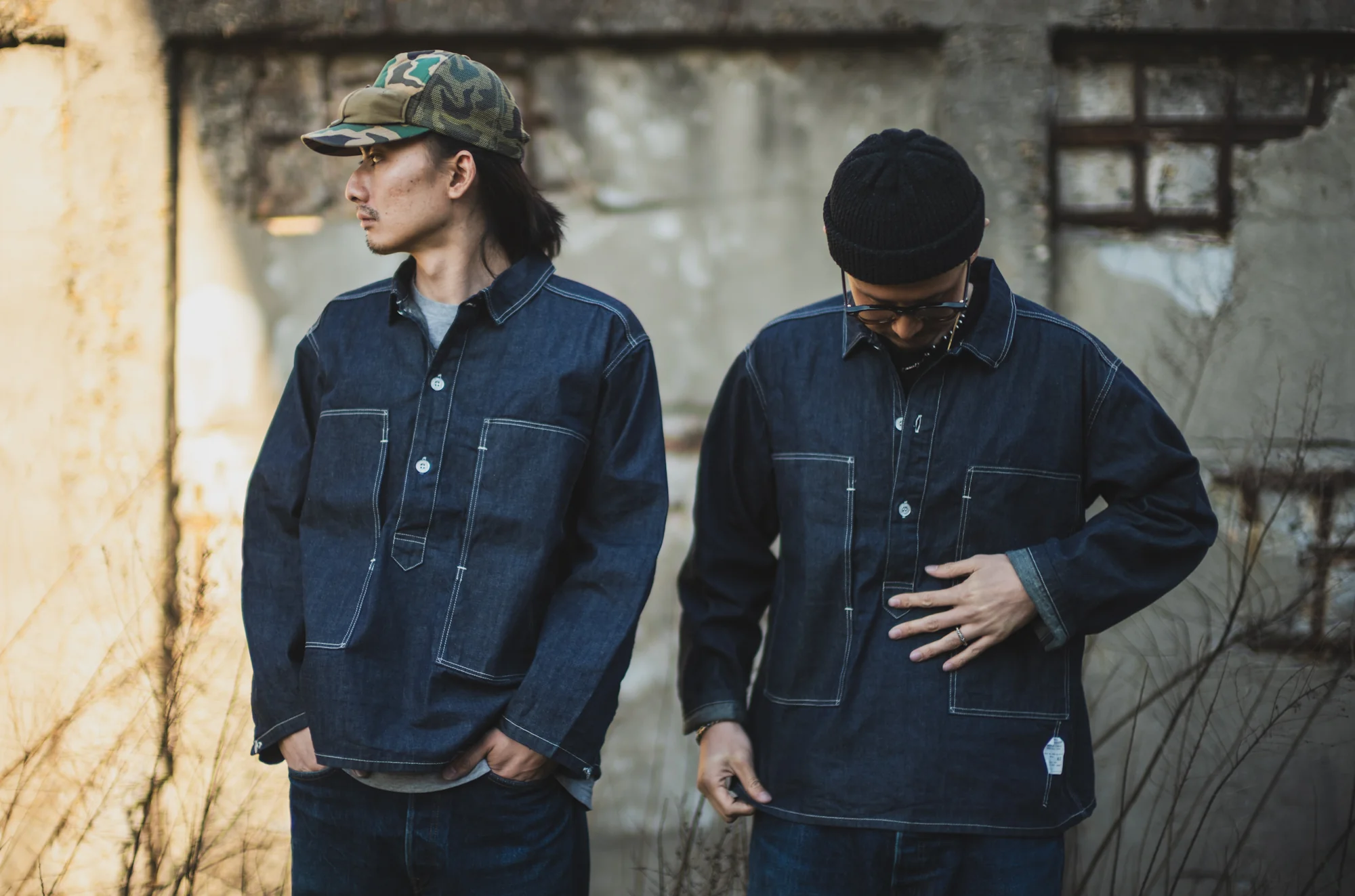
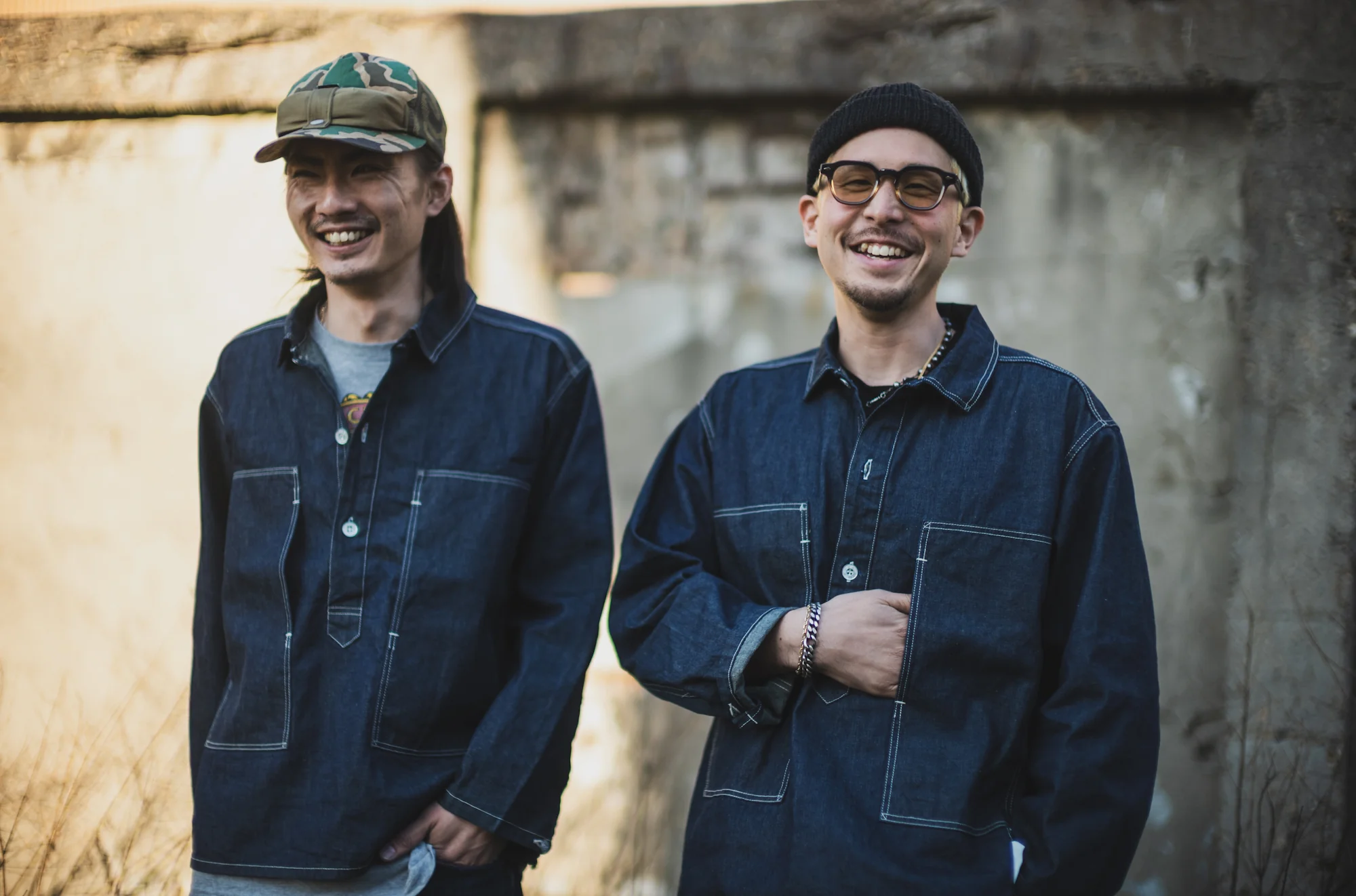
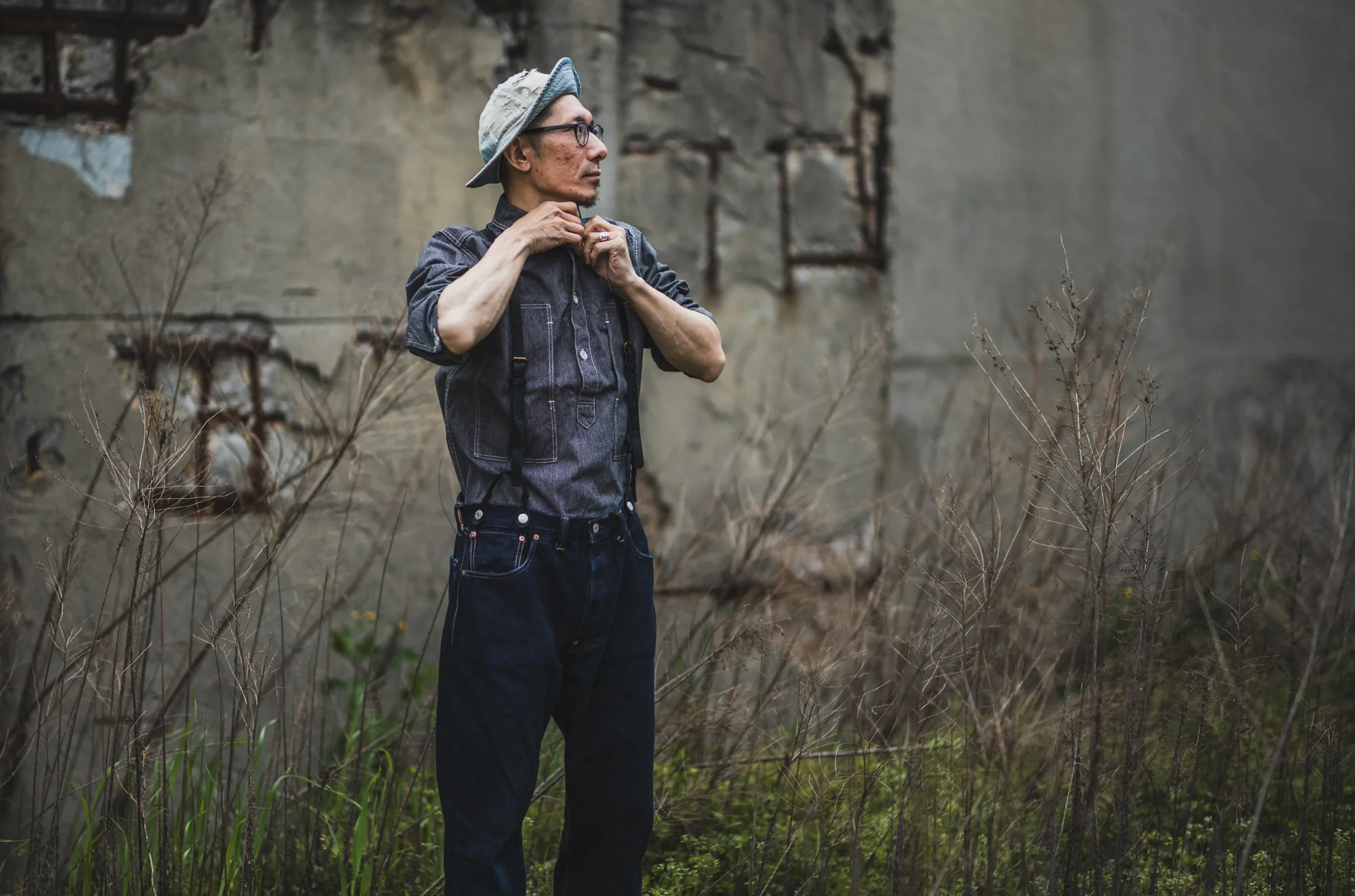
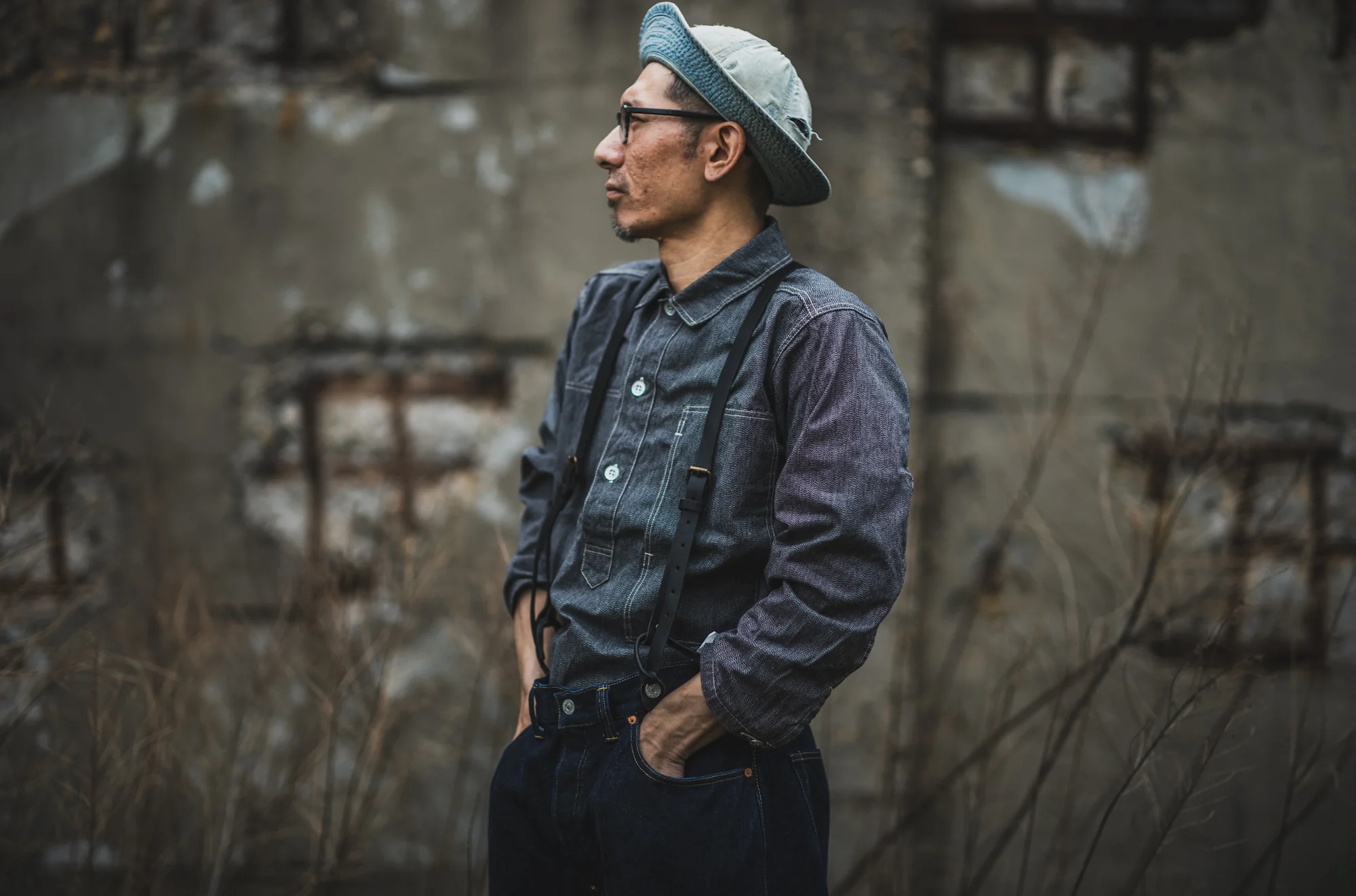
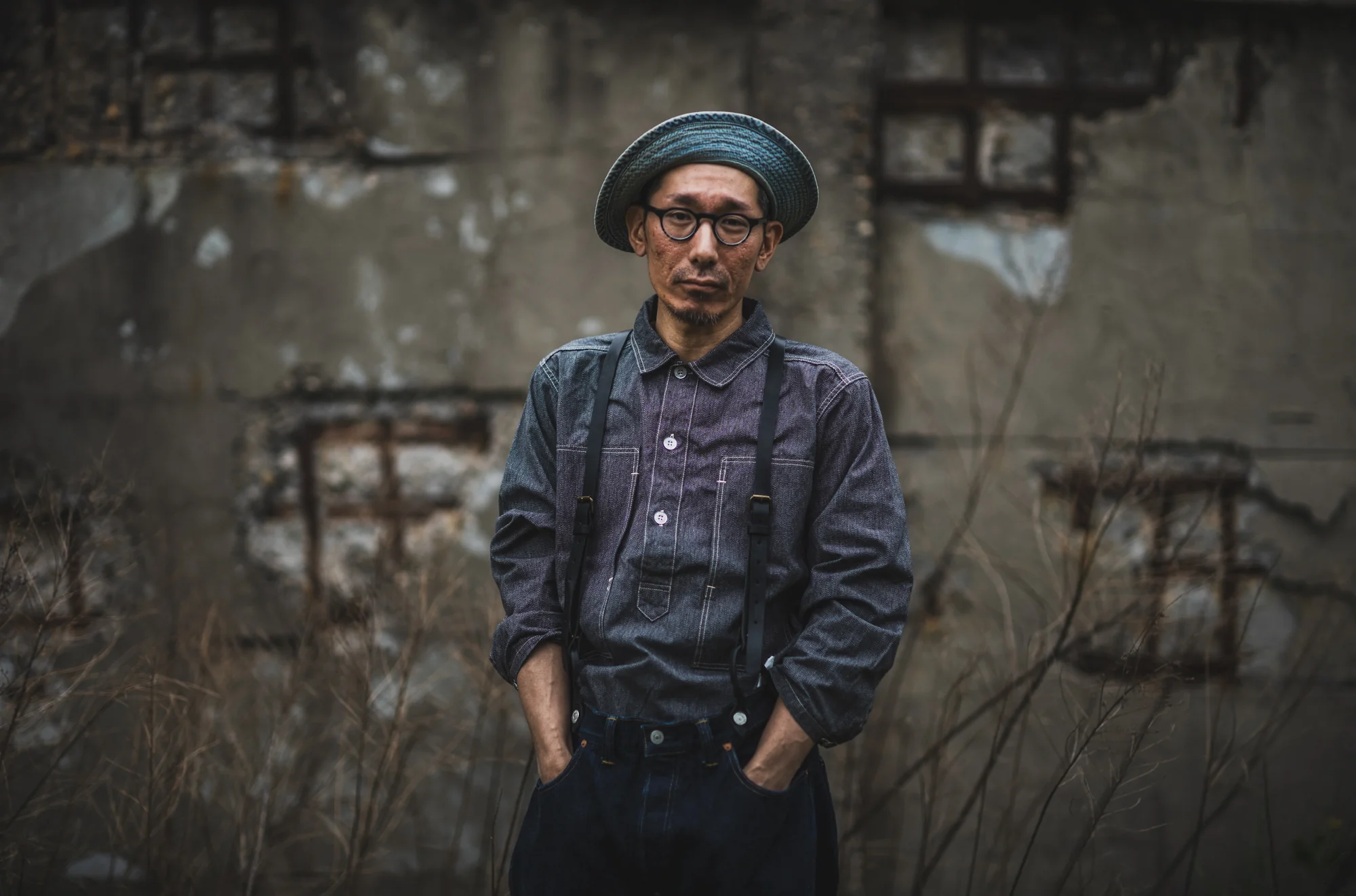
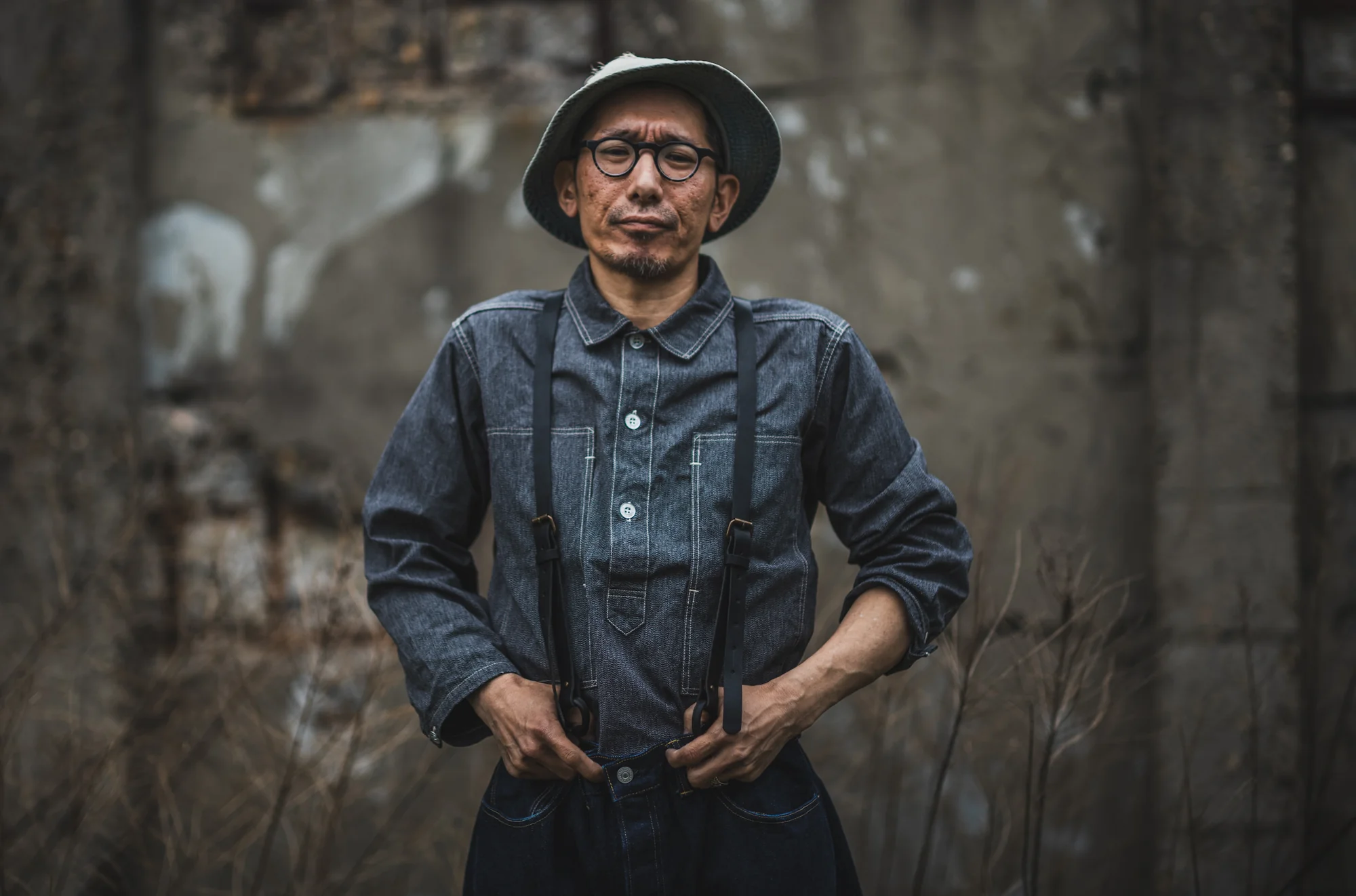
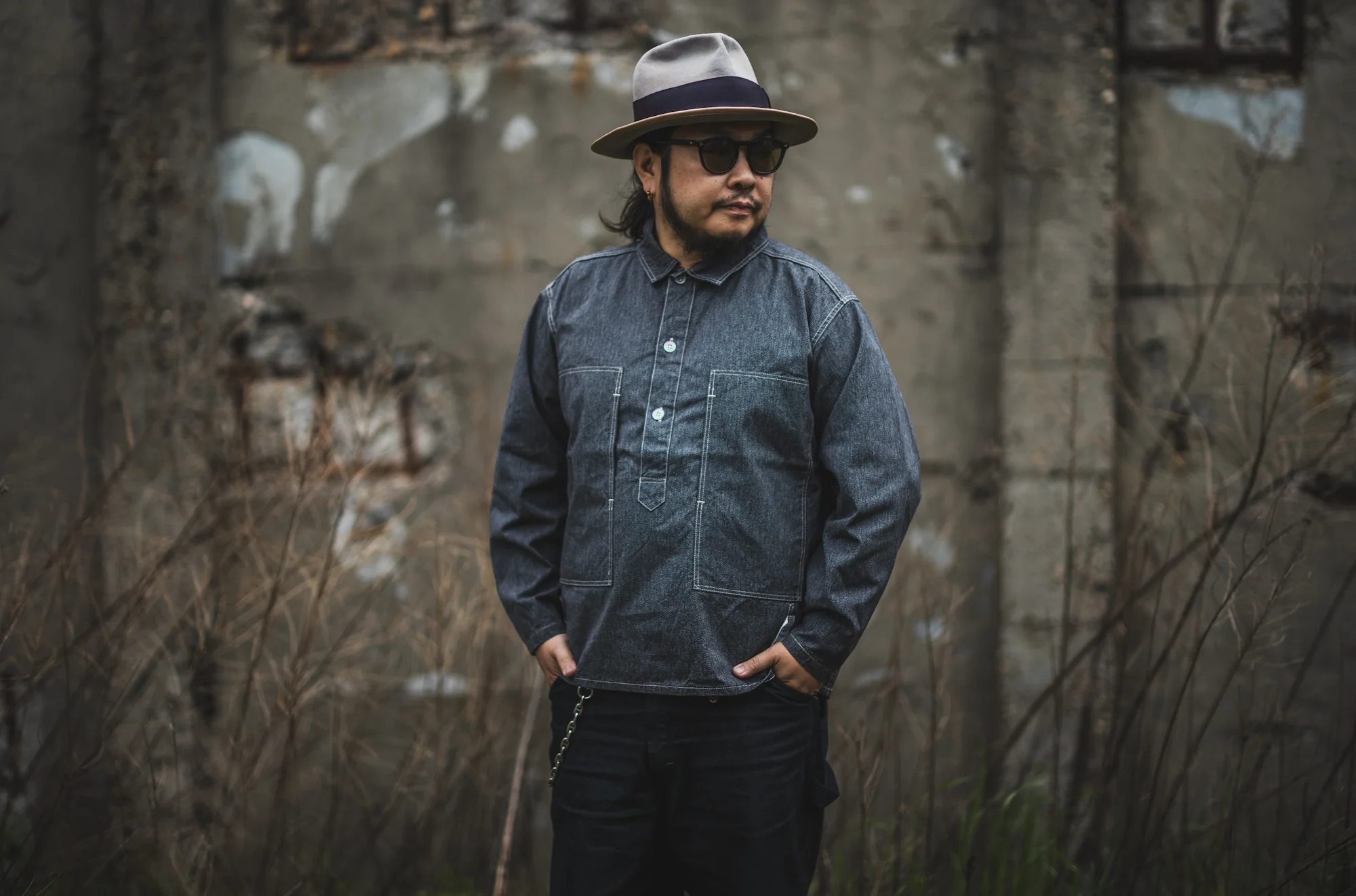
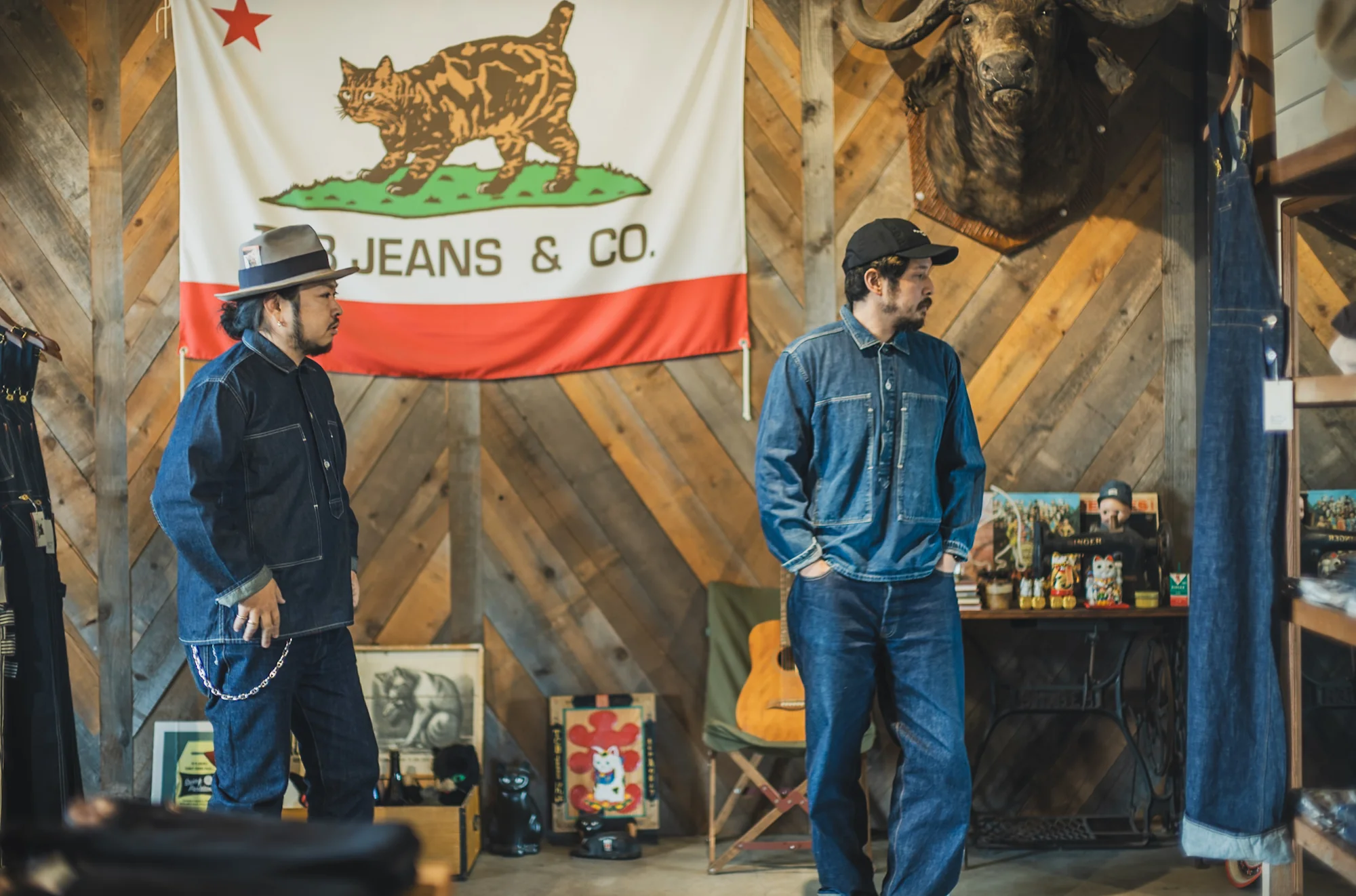
Cat Face Pullover Shirts!
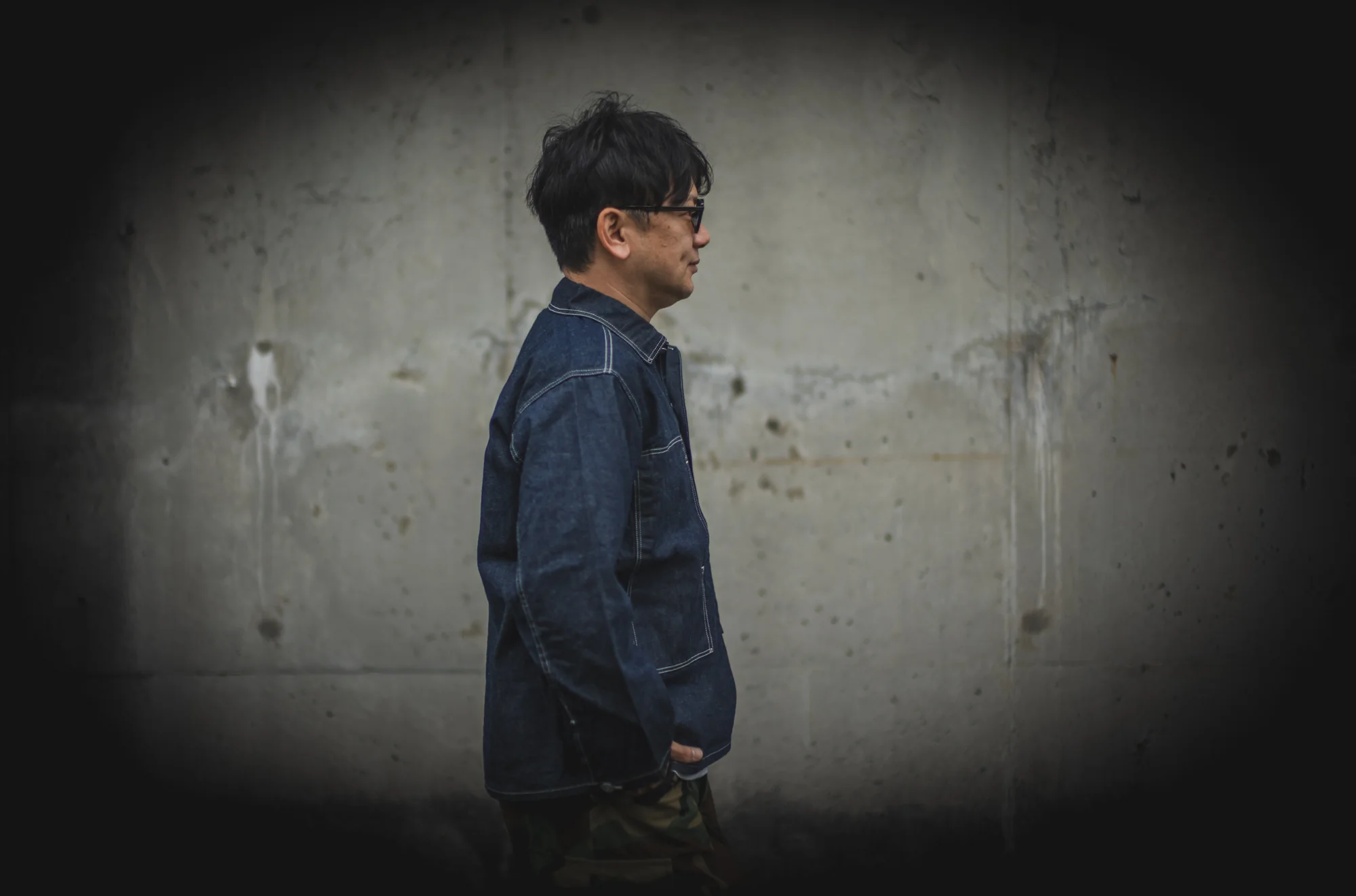
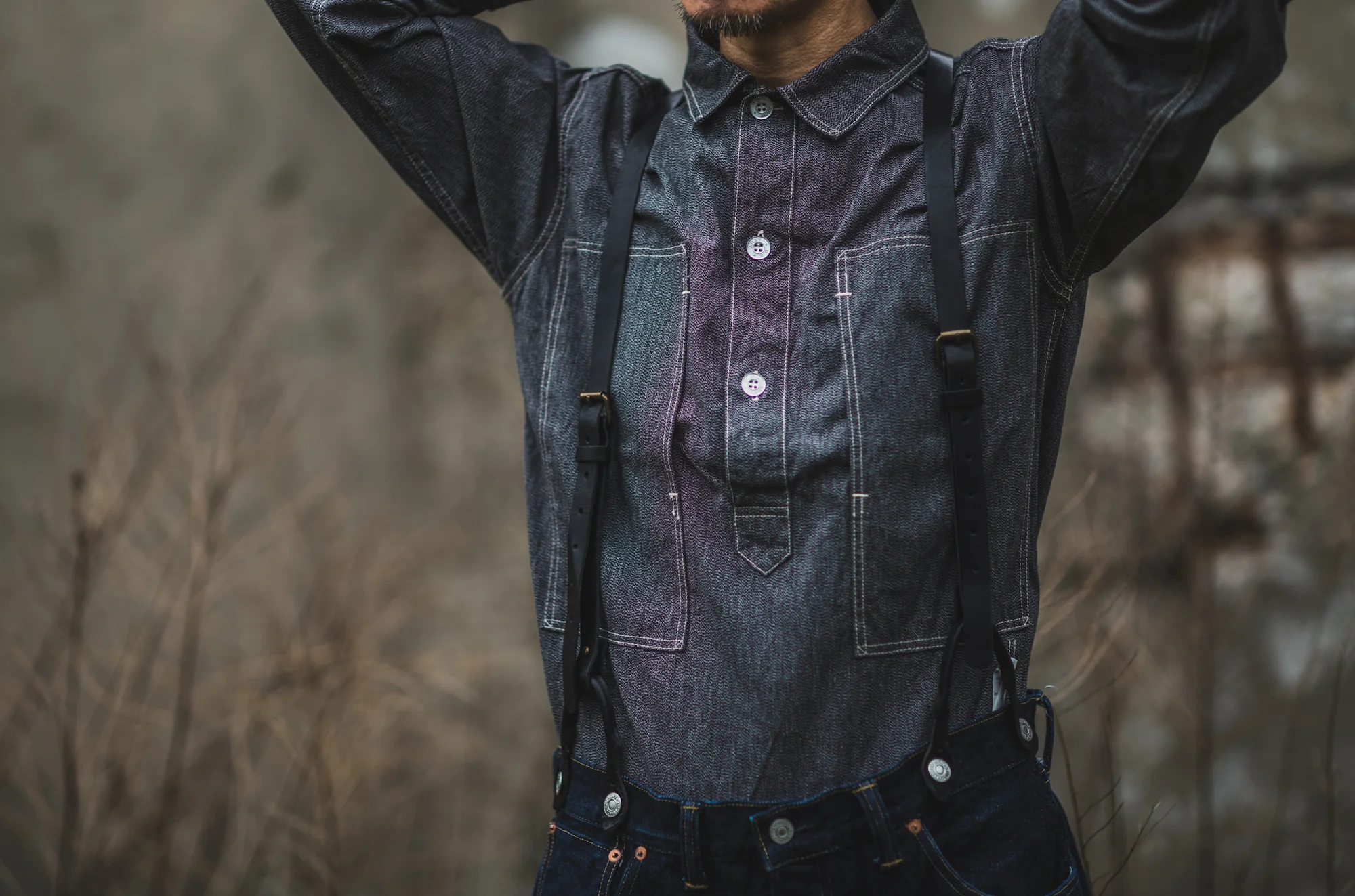
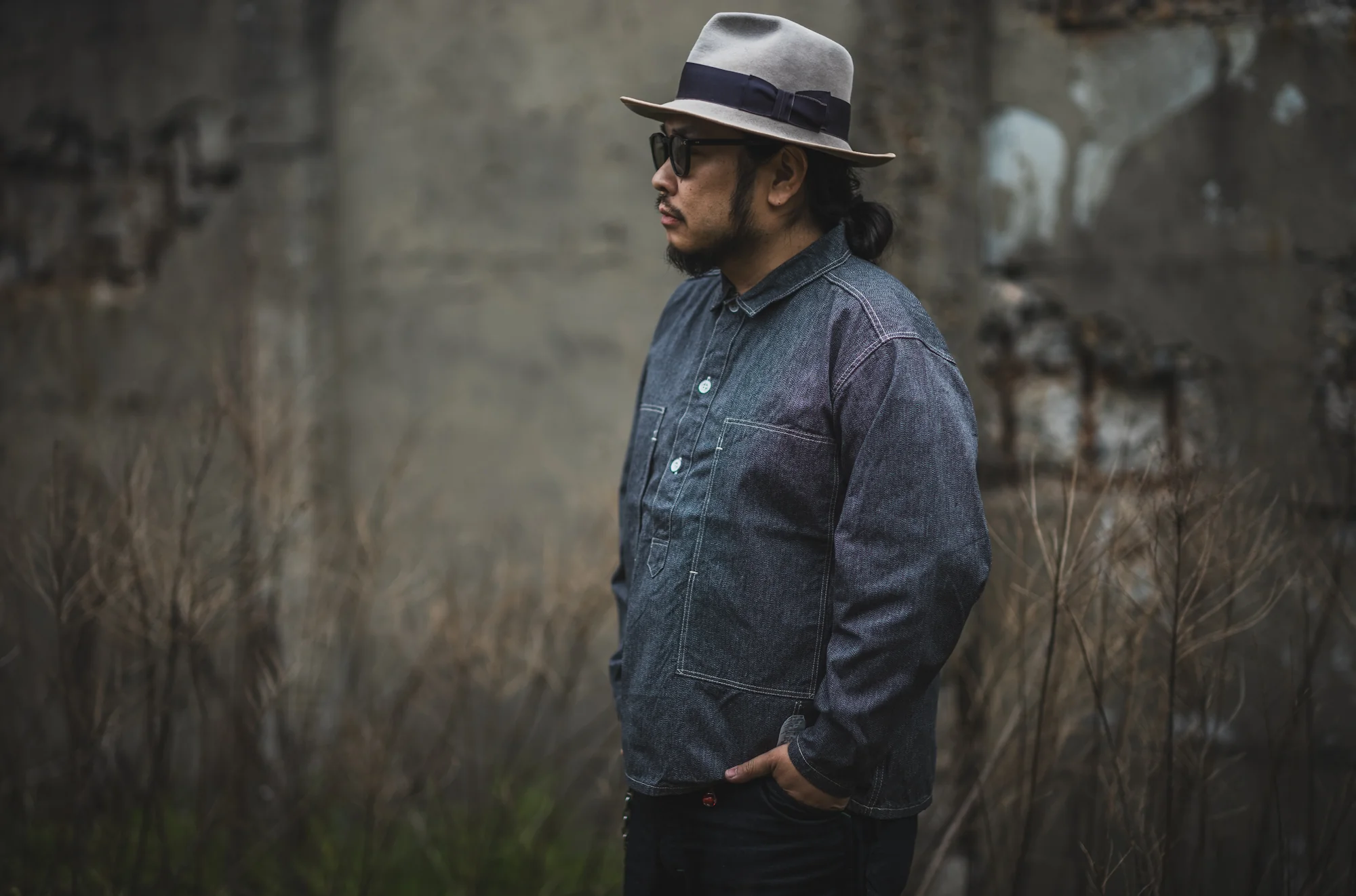
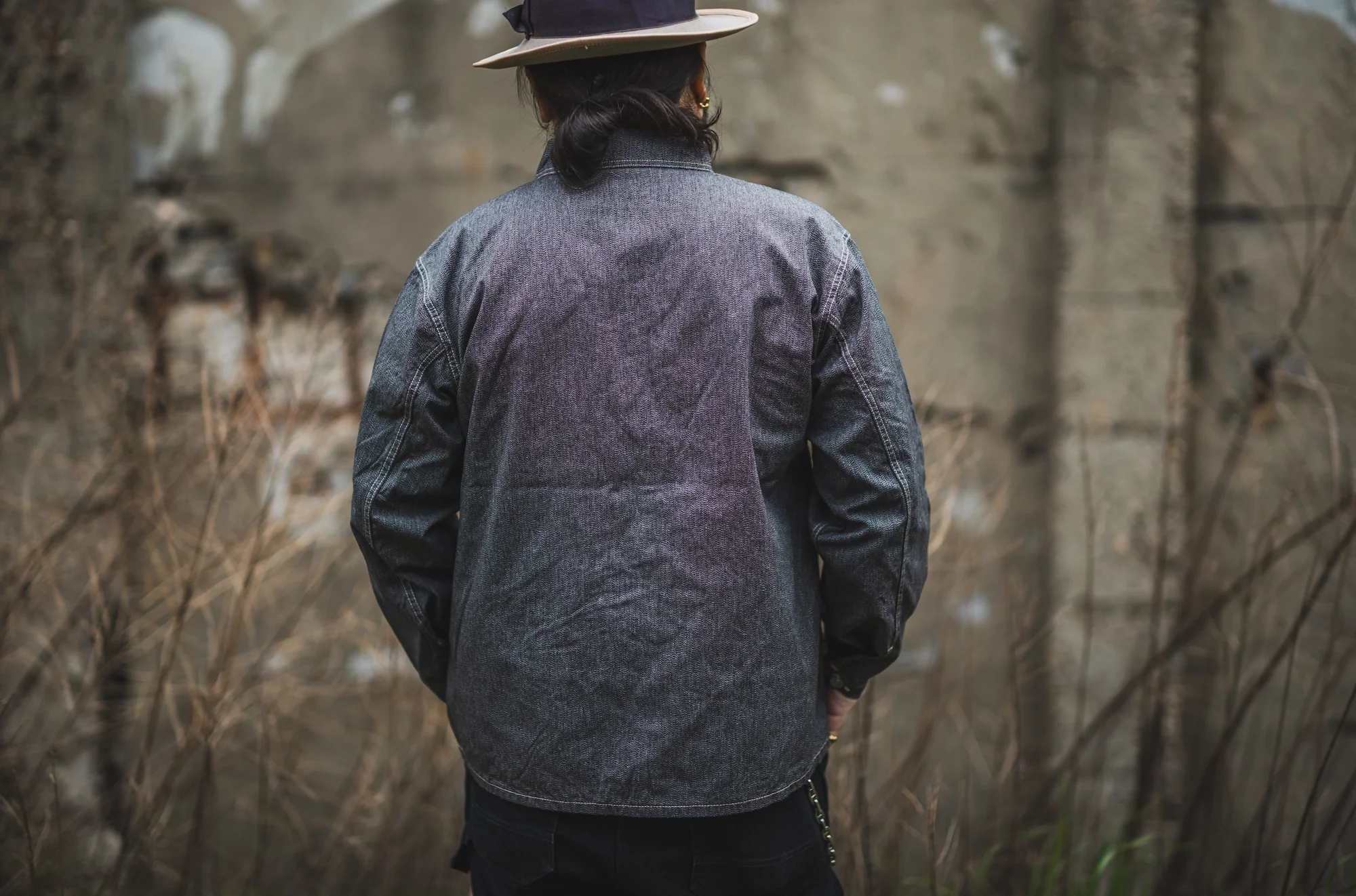
The fabric is made using a technique called "kabe-yori," which leaves variations in the strength of the twist.Some parts are tightly twisted, while others are slightly looser. This gap creates a black chambray with depth and character.
It's not a uniformly finished fabric, but rather has a somewhat undulating appearance. Back then, the spinning or the weaving techniques were immature so that they had to be more uneven.That's what I believe we call vintagelike!
Details & Craftsmanship
Every detail has been carefully considered to bring you the perfect product.
Details & Craftsmanship
Every detail has been carefully considered to bring you the perfect product.
Details & Craftsmanship
Every detail has been carefully considered to bring you the perfect product.
Details & Craftsmanship
Every detail has been carefully considered to bring you the perfect product.
Details & Craftsmanship
Every detail has been carefully considered to bring you the perfect product.
Details & Craftsmanship
Every detail has been carefully considered to bring you the perfect product.
Details & Craftsmanship
Every detail has been carefully considered to bring you the perfect product.
Details & Craftsmanship
Every detail has been carefully considered to bring you the perfect product.
Details & Craftsmanship
Every detail has been carefully considered to bring you the perfect product.
Details & Craftsmanship
Every detail has been carefully considered to bring you the perfect product.
Details & Craftsmanship
Every detail has been carefully considered to bring you the perfect product.
Details & Craftsmanship
Every detail has been carefully considered to bring you the perfect product.
Details & Craftsmanship
Every detail has been carefully considered to bring you the perfect product.
Details & Craftsmanship
Every detail has been carefully considered to bring you the perfect product.
Details & Craftsmanship
Every detail has been carefully considered to bring you the perfect product.
Details & Craftsmanship
Every detail has been carefully considered to bring you the perfect product.
Details & Craftsmanship
Every detail has been carefully considered to bring you the perfect product.
Details & Craftsmanship
Every detail has been carefully considered to bring you the perfect product.
Details & Craftsmanship
Every detail has been carefully considered to bring you the perfect product.
Details & Craftsmanship
Every detail has been carefully considered to bring you the perfect product.
Details & Craftsmanship
Every detail has been carefully considered to bring you the perfect product.
Details & Craftsmanship
Every detail has been carefully considered to bring you the perfect product.
Details & Craftsmanship
Every detail has been carefully considered to bring you the perfect product.
Details & Craftsmanship
Every detail has been carefully considered to bring you the perfect product.
Details & Craftsmanship
Every detail has been carefully considered to bring you the perfect product.
Details & Craftsmanship
Every detail has been carefully considered to bring you the perfect product.
Details & Craftsmanship
Every detail has been carefully considered to bring you the perfect product.
Details & Craftsmanship
Every detail has been carefully considered to bring you the perfect product.
Details & Craftsmanship
Every detail has been carefully considered to bring you the perfect product.
Details & Craftsmanship
Every detail has been carefully considered to bring you the perfect product.
Details & Craftsmanship
Every detail has been carefully considered to bring you the perfect product.
Details & Craftsmanship
Every detail has been carefully considered to bring you the perfect product.
Details & Craftsmanship
Every detail has been carefully considered to bring you the perfect product.
Details & Craftsmanship
Every detail has been carefully considered to bring you the perfect product.
Description
Thankfully, they've been supported for far longer than we ever imagined as it was actually the very 2nd item TCB's ever made.
That's precisely why we deliberately refrained from producing an item that had always been in the back of our minds.
We worried that the product range might overlap. By increasing the number of products from the same era and with the similar fabric, the sewing specifications, etc,
we worried that the individual presence of each item might become diluted.
There was an item that we had been holding back on for that reason. We've owned the vintage one for a long time, and in fact, we even made a sample about 7 years ago. But for the reasons mentioned above, we shelved the project, thinking, "We already have the Seamen series..." That item was the US ARMY M-35 Pull Over Shirt. One day, when I picked up that sample again after a long time, for reasons I can't explain, I felt an overwhelming urge to make it now.It was like flipping through an old photo album. The atmosphere from that time still lingers, and conversely, I felt that this is the right timing to release these shirts. When that happens, TCB moves quickly.
We thought a lot about the name of this new product until the very end.
A-Men?
None of them felt quite right. That's when I came across the word "Dogface."
It's slang for an infantryman in the US Army.
But instead of using it as is, how should we translate it for TCB?
It was not long before we reached the word, Catface, haha.
A garment that had been dormant for a long time has finally taken shape.
Thankfully, they've been supported for far longer than we ever imagined as it was actually the very 2nd item TCB's ever made.
That's precisely why we deliberately refrained from producing an item that had always been in the back of our minds.
We worried that the product range might overlap. By increasing the number of products from the same era and with the similar fabric, the sewing specifications, etc,
we worried that the individual presence of each item might become diluted.
There was an item that we had been holding back on for that reason. We've owned the vintage one for a long time, and in fact, we even made a sample about 7 years ago. But for the reasons mentioned above, we shelved the project, thinking, "We already have the Seamen series..." That item was the US ARMY M-35 Pull Over Shirt. One day, when I picked up that sample again after a long time, for reasons I can't explain, I felt an overwhelming urge to make it now.It was like flipping through an old photo album. The atmosphere from that time still lingers, and conversely, I felt that this is the right timing to release these shirts. When that happens, TCB moves quickly.
For the double stitching on the collar, it was a 1/4-inch (approximately 6mm wide) sewing machine used.
On the other hand, for the rectangular chest pockets, also double-stitched, it was a 3/16-inch (approximately 5mm wide) sewing machine used.
This difference in seam width is something that sewing factories definitely want to avoid. Why? Because the production is all about efficiency. If you need more machines with a different machine setting, it'll slow down the production.
However, the vintage models we referenced this time were different.
This is purely my speculation, but...let's say once the order from the military was placed and the sewing specifications were set, there were two processes involving two-needle stitching and the factory had two double-needle sewing machines. One was set with 1/4inch and the other one was 3/16 inch. Even though the widths were different, they decided to use those two machines without changing the machine setting. I think it was just a practical, on-the-ground decision made by the sewing factory. Of course, "2 sewing machines" is just a hypothetical example; in reality, the decision was made on a much larger scale .
I think the interesting thing about military gear is the interpretation of the civilian factories towards the military specifications.
Back then, factories had to come up with many ideas as to how to meet the strict specifications with the equipment that the manufacturer had, sometimes they had to get through difficult specs by doing an almost foul play. I mean that it looks okay on the first look but if you look closely at how they are really sewn, it doesn't really meet requirements. That ingenuity and compromise ultimately manifest the product's uniqueness.
Originally, this wasn't clothing for sale but clothing to be supplied.
That rationality and the accumulation of on-the-ground decisions might be what makes the details most interesting when you look at them now.
We thought a lot about the name of this new product until the very end.
A-Men?
None of them felt quite right. That's when I came across the word "Dogface."
It's slang for an infantryman in the US Army.
But instead of using it as is, how should we translate it for TCB?
It was not long before we reached the word, Catface, haha.
A garment that had been dormant for a long time has finally taken shape.
Cat Face Pullover Shirts!
The fabric is made using a technique called "kabe-yori," which leaves variations in the strength of the twist.Some parts are tightly twisted, while others are slightly looser. This gap creates a black chambray with depth and character.
It's not a uniformly finished fabric, but rather has a somewhat undulating appearance. Back then, the spinning or the weaving techniques were immature so that they had to be more uneven.That's what I believe we call vintagelike!